Nissan Pathfinder 4 R52: Model Years and Facelift
The fifth-generation Pathfinder, with the internal index R52, was produced from 2013 to 2020 for the global market. During this time, the model underwent one significant facelift.
- Pre-facelift (2013–2016): The model had a more angular and rugged design, characteristic of previous generations. Distinctive features include a large grille with three horizontal slats and massive headlights.
- Post-facelift (2017–2020): In 2016, the updated Pathfinder was presented. The main changes affected the exterior: a new V-Motion grille (Nissan's signature style), more streamlined headlights and fog lights, as well as revised rear optics appeared. The interior received an updated multimedia system with a larger screen, a new steering wheel, and an expanded list of standard equipment.
Model Description
The Pathfinder R52 was radically different from its body-on-frame predecessor, the R51. It was a full-size crossover with a unibody and independent suspension, built on the Nissan D platform (shared with the Nissan Murano and Infiniti QX60). The main emphasis was on comfort, spaciousness, and family versatility.
Key features:
- Layout: Available with either front-wheel drive or all-wheel drive (a system with a clutch that engages the rear axle when necessary).
- Engines: In most markets, including Russia, one gasoline engine was offered - a naturally aspirated 3.5-liter V6 (VQ35DE) with 249 hp after the facelift (before 2016 - 249 hp, in some markets up to 271 hp). It was paired exclusively with an X-Tronic continuously variable transmission (CVT).
- Transmission: The CVT simulated virtual "gears" for a more familiar driving feel.
- Interior: A spacious three-row interior with an innovative-for-its-time EZ Flex Seating System. It allowed for easy reconfiguration of the second-row seats to access the third row, even with a child seat installed.
- Capacity: One of the most spacious interiors in its class with an excellent trunk even when using the third row.
How to Remove the Front Bumper
- Open the hood.
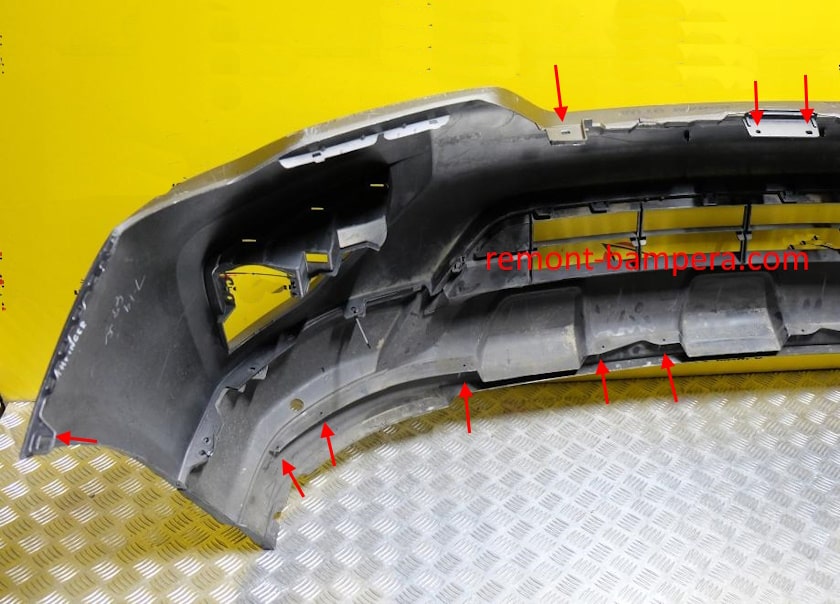
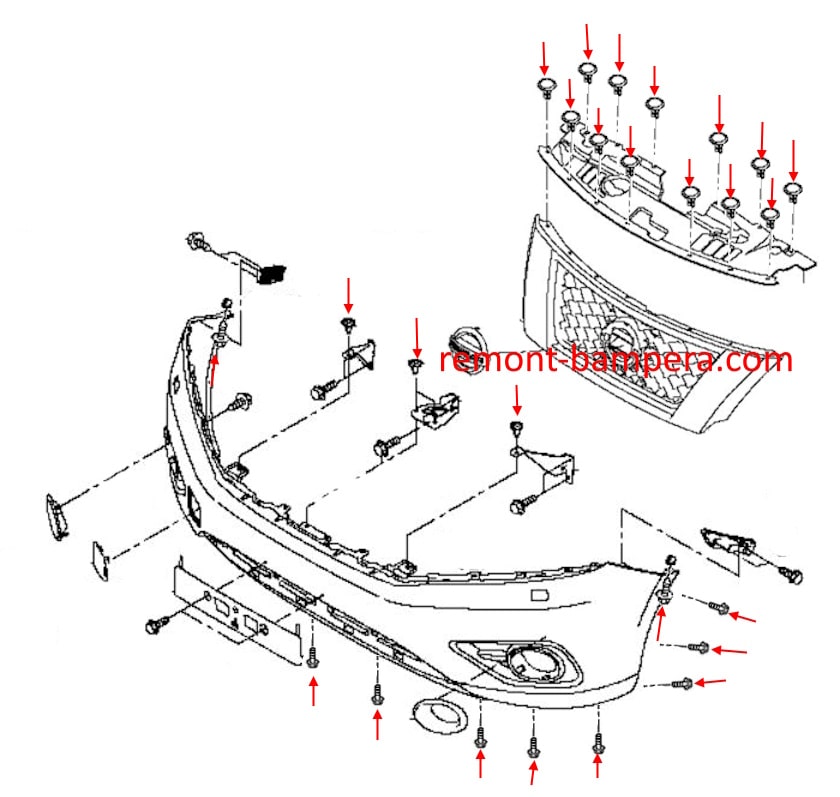
- Under the hood, remove thirteen plastic rivets (inserted from top to bottom) that secure the top cover and the grille.
- Remove the top cover.
- Release from the clips and remove the grille.
- Under the grille, remove four plastic rivets (inserted from top to bottom) that secure the top part of the front bumper.
- From underneath the vehicle, unscrew the screws (installed from bottom to top) that secure the lower part.
- Turn the wheels to the side.
- In the wheel arches, unscrew three screws on each side that secure the front part of the fender liners.
- Behind the fender liners, unscrew one screw on each side (installed from bottom to top) that secure the corners to the fenders.
- Release the clips in the fenders (pull the corners towards yourself).
- Release the fasteners under the headlights.
- With an assistant, carefully pull the bumper forward (mind the wiring).
- Disconnect the connectors for the fog lights (if equipped).


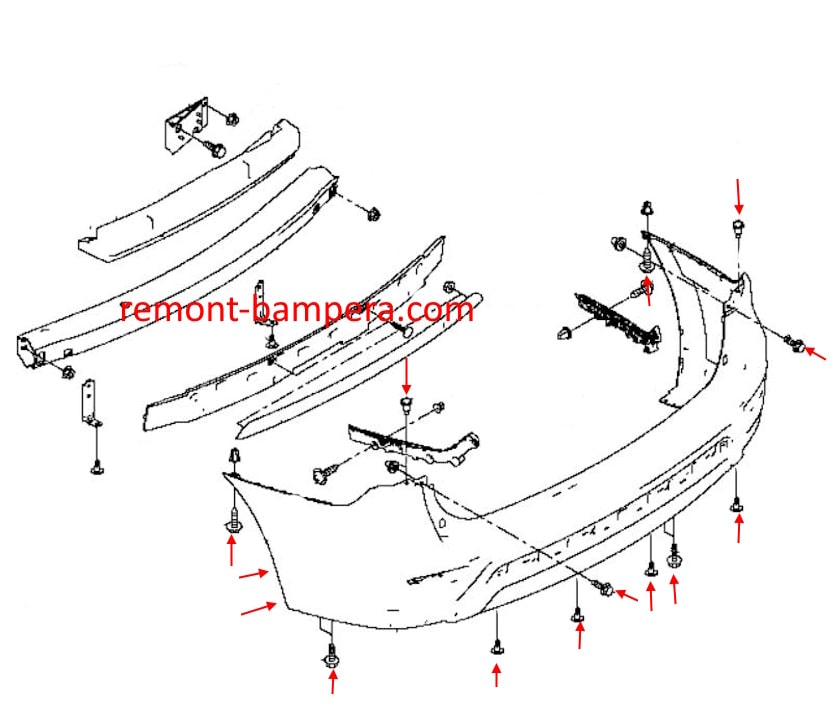
How to Remove the Rear Bumper
- Open the tailgate.
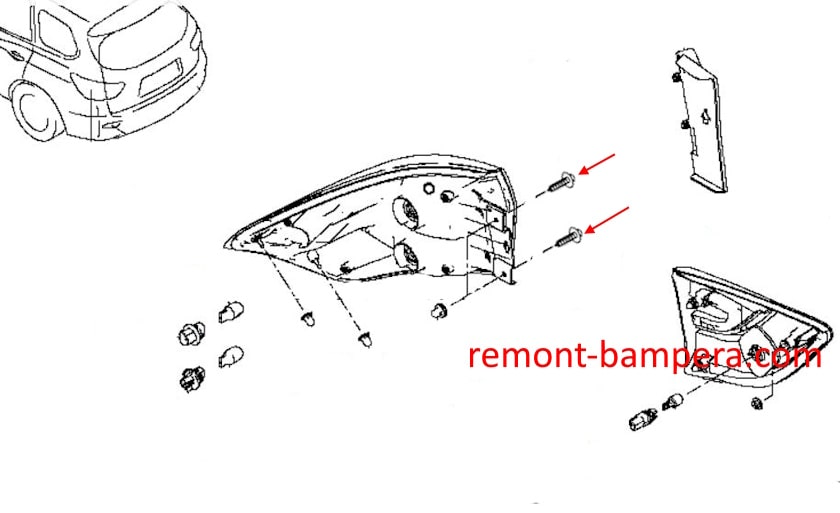
- Remove the trim panels near the rear lights (held by clips, need to be pried off).
- Under the trim panels, unscrew two screws on each side and remove the rear lights (held by clips).
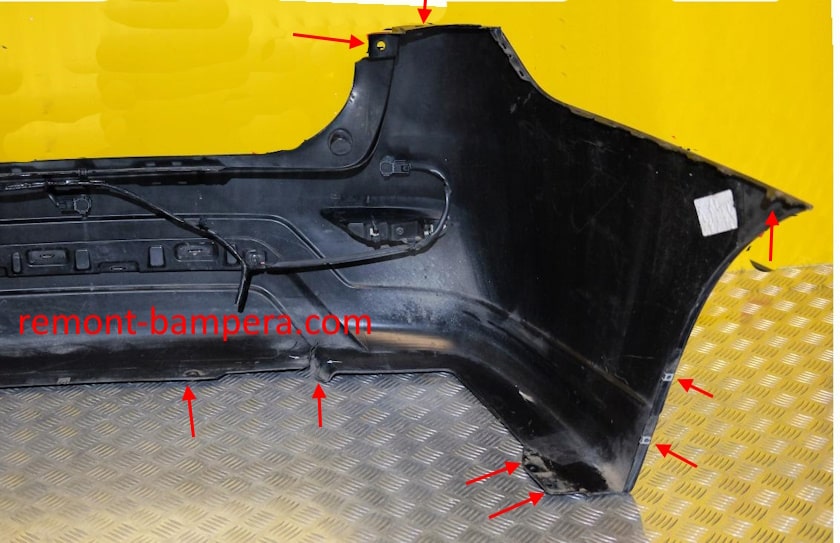
- Under the rear lights, remove two plastic rivets and unscrew two screws in the tailgate opening.
- From underneath the vehicle, unscrew four screws and remove four plastic rivets.
- In the wheel arches, unscrew two screws on each side that secure the fender liners (splash guards).
- Move the fender liners aside and unscrew one screw on each side (installed from bottom to top) that secure the corners to the fenders.
- Release the clips in the fenders (pull the corners towards yourself).
- With an assistant, pull the bumper backwards (mind the wiring).
- Disconnect the electrical connectors (if equipped).


Interesting Facts
- Concept Change: The R52 shocked fans of the brand, as it abandoned the body-on-frame construction and the low-range transfer case, moving from the SUV class to the crossover class. This was a strategic decision in favor of the market, where buyers valued comfort over off-road capability.
- "Golden Key": In the base trim, the car was often equipped with a keyless access system and an engine start button, which was a rare feature for base versions of competitors in those years.
- Twins: The model is a technical twin of the Infiniti QX60 (formerly JX), which speaks to its high build quality and the quality of materials used.
Advantages and Disadvantages
Advantages:
- Spacious and versatile interior: One of the best "family" cars in its segment. Comfortable seating, flexible seat configuration, and a large trunk.
- Smooth ride and comfort: Excellent sound insulation and a soft suspension that handles road imperfections well.
- Reliable naturally aspirated V6 engine: A durable, repairable engine not prone to serious issues.
- Good equipment: Even base versions often came with many options.
Disadvantages:
- Continuously Variable Transmission (CVT): The model's main "Achilles' heel." The CVT's lifespan rarely exceeds 150-200 thousand km; it is sensitive to overheating, aggressive driving, and untimely fluid changes. Repair is expensive.
- Mediocre off-road capability: This is a crossover, not an off-roader. Serious off-road terrain and deep mud are not its forte. The all-wheel drive is designed for light off-road use and confident driving on winter roads.
- Dull dynamics: The powerful engine is "eaten up" by the car's heavy weight and the CVT, which doesn't like hard acceleration.
- Fuel consumption: A naturally aspirated 3.5-liter V6 cannot be economical. In the city, consumption can easily reach 14-16 l/100 km.
Italiano
Français
русский
English
Deutsch
Español