Nissan Qashqai II (J11): Model Years and Positioning

The second generation of the Nissan Qashqai, with the internal code J11, debuted in late 2013 and went on sale in early 2014. In Europe and Russia, it replaced the first generation (J10), successfully continuing its concept of a compact urban crossover. Production for the global market, including Russia (until 2022), was set up at the plant in Sunderland (UK). In 2017, the model underwent a major facelift that affected the exterior, interior, and technical components.


Technical Specifications (post-2017 facelift)

Platform: Upgraded CMF-C/D (Common Module Family) platform.

Engines:

Petrol:

  • 1.2 DIG-T (115 HP) – turbocharged, with direct injection. The main small-displacement option.
  • 1.3 DIG-T (140 and 160 HP) – a new engine developed in alliance with Daimler. Replaced the 1.6 and 1.2 after the facelift.
  • 1.6 (115 HP) – naturally aspirated, offered at the start of production.

Diesel:

  • 1.5 dCi (115 HP) – the most popular and economical diesel option.
  • 1.6 dCi (130 and 150 HP) – a more powerful diesel version.

Transmission:

  • 6-speed manual – base for most engines.
  • 6-speed "robotized" Easytronic – a rare option for the 1.6 engine.
  • X-Tronic CVT – continuously variable transmission, offered for turbo petrol and diesel engines. Simulated virtual "shifts".

Drivetrain: Front-wheel drive (2WD) or all-wheel drive (4WD, system based on a multi-plate clutch).


Bumper plastic marking >PP+EPDM-T15<


How to remove the front bumper

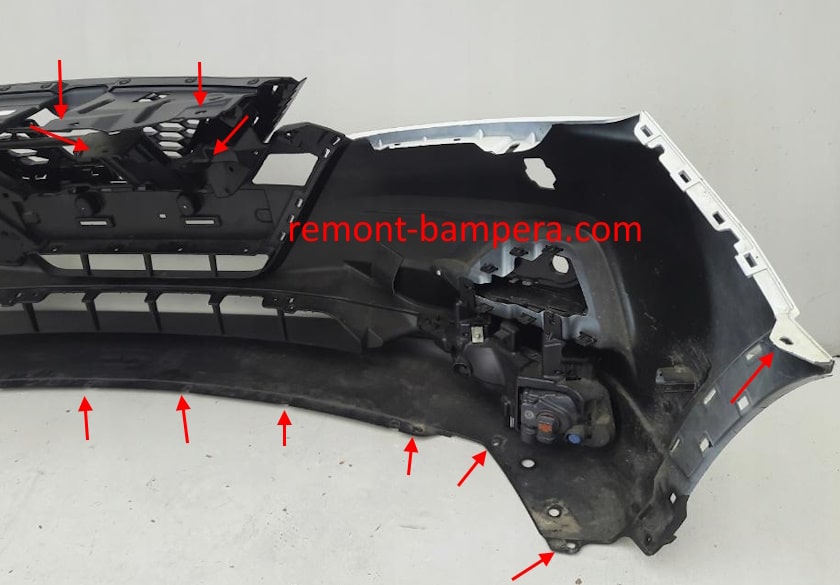
  1. Open the hood.
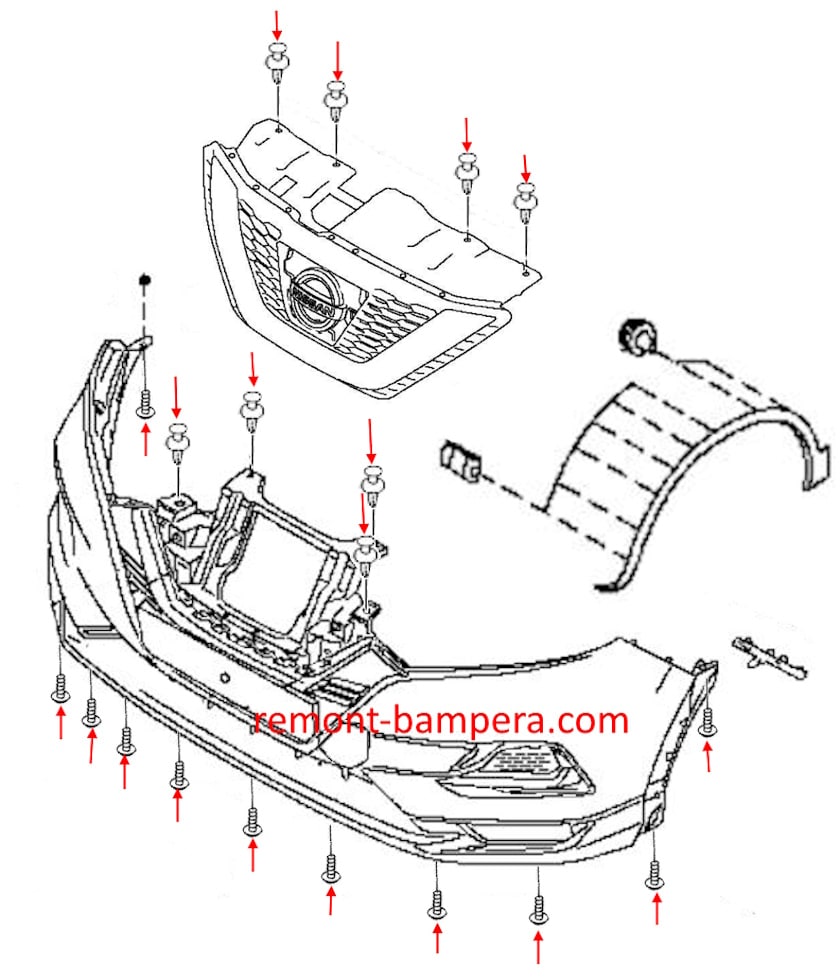
  2. Under the hood, remove four push-pin fasteners and take off the radiator grille (held by clips, pull towards you).
  3. Under the grille, remove four push-pin fasteners that secure the top part of the front bumper.
  4. From under the car, unscrew ten screws (fastened from bottom to top) that secure the engine guard, fender liners, and arch trim.
  5. Turn the wheels to the side.
  6. Release the arch trim (front part, pull towards you from bottom to top).
  7. Behind the fender liners, unscrew one screw on each side (fastened from bottom to top) that secure the bumper corners to the fenders.
  8. Release the clips in the fenders (pull the corners towards you).
  9. Release the clips under the headlights (pull towards you).
  10. With an assistant, carefully pull the bumper forward (watch for wires and hoses).
  11. Disconnect the electrical connectors (if present).
  12. Disconnect the headlight washer hoses (fluid may leak).

Front bumper mounting locations Nissan Qashqai II J11 (2013-2022)

Front bumper mounting diagram Nissan Qashqai II J11 (2013-2022)


How to remove the rear bumper

⇒Useful tips on how to remove the bumper and not break anything.⇐

  1. Open the trunk lid.
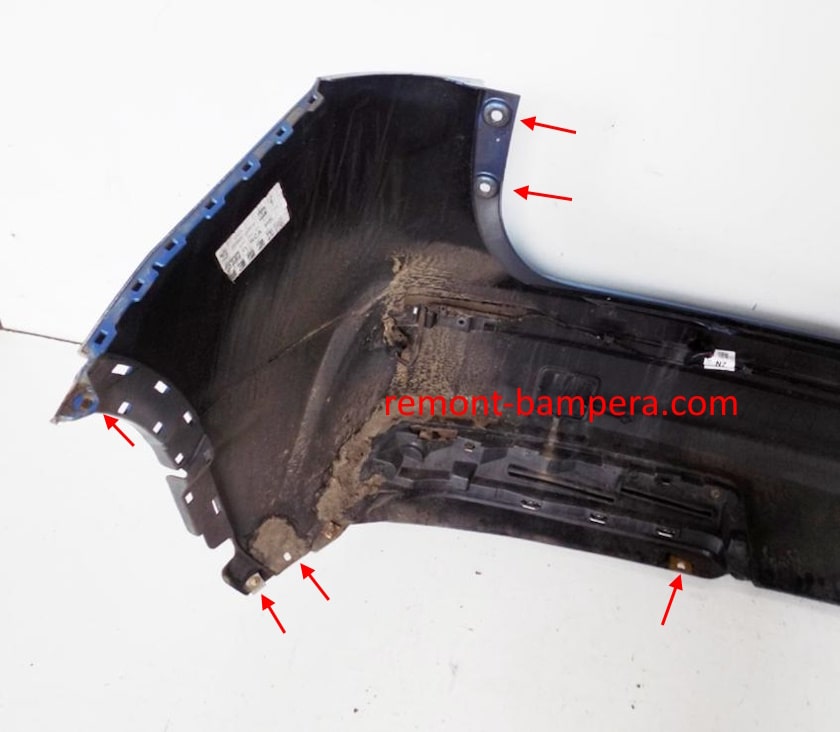
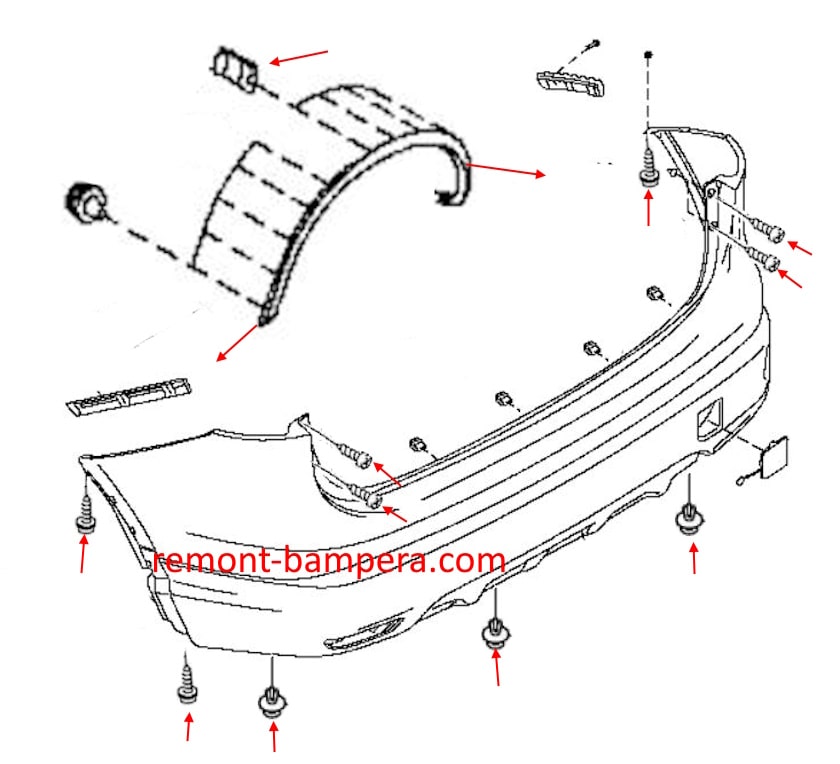
  2. In the trunk opening, unscrew two screws on each side.
  3. From under the car, unscrew two screws and remove four push-pin fasteners (fastened and inserted from bottom to top).
  4. (If present) Unscrew the screws and remove the splash guards in the wheel arches.
  5. Release the arch trim (rear part) from the bumper (held by clips, pull towards you from bottom to top).
  6. Move the fender liners aside and unscrew one screw on each side (fastened from bottom to top) that secure the bumper corners to the fenders.
  7. Release the clips in the fenders (pull the corners towards you).
  8. Release the fasteners in the trunk opening (pull towards you).
  9. With an assistant, pull the bumper backwards (pay attention to the wires).
  10. Disconnect the electrical connectors (if present).

mounting locations of the rear bumper Nissan Qashqai II J11 (2013-2022)

Rear bumper mounting diagram Nissan Qashqai II J11 (2013-2022)


Interesting Facts:

  • European Origin: Contrary to stereotypes, the Qashqai II for Russia and Europe was designed in London and was primarily manufactured in the UK.
  • First of its Kind: It was the first-generation Qashqai that created the segment of "compact family crossovers". The second generation only strengthened its leadership.
  • Accident-Free Record: In 2014, the Sunderland plant set a world record for car production without a single missed workday due to an industrial injury.
  • e-Power Hybrid: After the facelift, an e-Power hybrid version appeared for some markets (but not for Russia). Its peculiarity is that the petrol engine only charges the battery, and the wheels are always driven by an electric motor (like in an electric car, but without the need to plug in).


Advantages and Disadvantages

Advantages (+):

  • Successful Design: Balanced, modern, and non-aggressive exterior that has aged well.
  • High-Quality Interior: After the 2017 facelift, the interior became significantly better: quality materials, pleasant design, new multimedia system with a large screen.
  • Comfortable Suspension: Excellent energy capacity, smooth ride, and cabin quietness. One of the most comfortable in its class.
  • Fuel Efficiency: The diesel 1.5 dCI and the new petrol 1.3 DIG-T show low fuel consumption.
  • Practicality: Spacious trunk (~430 L) and good rear seat space.

Disadvantages (–):

  • Unreliable CVT (X-Tronic): The main "sore spot" for used models. Requires strict adherence to the oil change schedule (every 60-80 thousand km) and a calm driving style. Repair is expensive.
  • Underpowered Engines: The base 1.2L (115 HP) version with air conditioning and a full load clearly lacks power for dynamic driving.
  • Expensive Maintenance: Original parts and service at official dealers are more expensive than those of Korean competitors.
  • Highway Noise: Although quietness is good, at high speeds noise from aerodynamics and tires becomes noticeable.