The Nissan Sentra sixth generation (body code B16) was produced from 2006 (as a 2007 model year) to 2012. This generation marked a significant step forward compared to its predecessor, focusing on comfort, space, and technology.

Production Years and Model Codes

  • Generation: Sixth (B16)
  • Production Years: 2006 – 2012 (for the North American and other markets)
  • Body Code: B16 — this is a universal code for the entire generation.
  • Facelift: A minor facelift was performed in 2010 for the 2011 model year. Changes included an updated radiator grille, bumpers, headlights and taillights, as well as minor interior updates.


Technical Specifications (based on the most common trim level)

  • Engine:
    • Base: 2.0-liter inline 4-cylinder MR20DE engine.
    • Power: 140 hp @ 5100 rpm.
    • Torque: 199 N·m @ 4800 rpm.
    • Feature: Aluminum block, variable valve timing system (CVTC).
  • Transmission:
    • Standard: 6-speed manual transmission.
    • Optional: Continuously Variable Transmission (CVT — Xtronic). This was one of the first mass-market models in its class to offer a CVT.
  • Platform and Suspension:
    • Platform: Shared with the first-generation Nissan Qashqai and Nissan Rogue.
    • Suspension: Front — independent MacPherson strut, rear — semi-independent torsion beam. The tuning was focused on ride comfort rather than sporty handling.
  • Dimensions and Capacity:
    • Wheelbase: 2700 mm (which was one of the best in its class).
    • Trunk volume: 439 liters.
    • Interior: Offered exceptional rear passenger space for the C-segment.

How to Remove the Front Bumper

The bumper is removed together with the radiator grille.

  1. Open the hood.
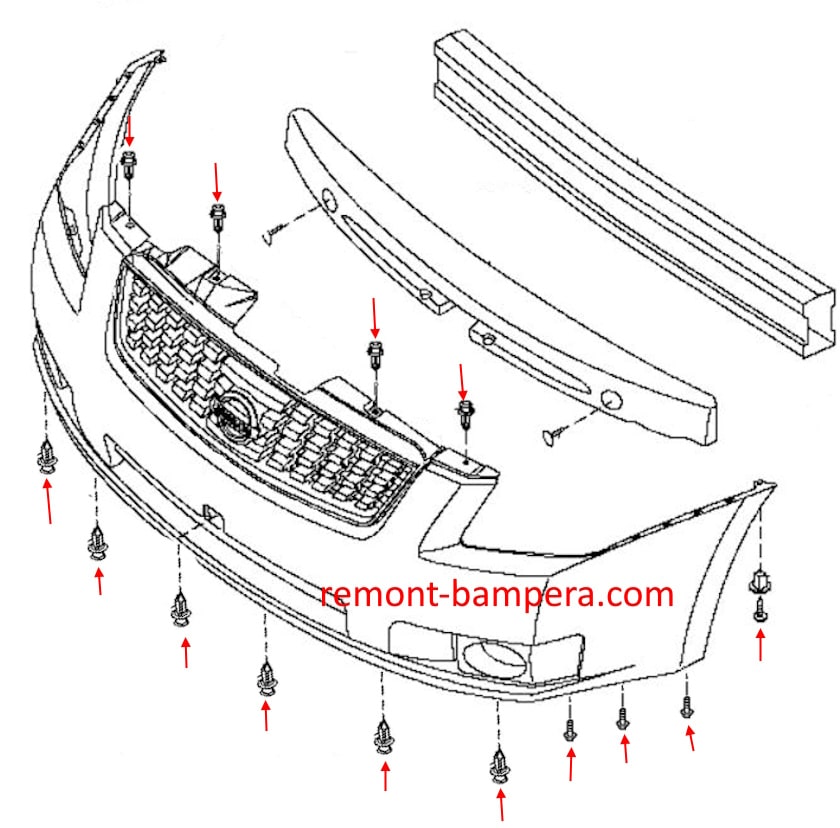
  2. Under the hood, pull out two plastic clips and unscrew two screws that secure the radiator grille and the top part of the front bumper.
  3. From under the car, unscrew six screws and pull out six plastic clips that secure the fender liners and the engine splash shield.
  4. Turn the wheels to the side.
  5. In the wheel arches, free the front part of the fender liners.
  6. Move the fender liners aside and unscrew one screw on each side (threaded from bottom to top) that secure the bumper corners to the fenders.
  7. Release the clips in the fenders (pull the corners towards yourself).
  8. With an assistant, carefully pull the bumper forward (watch for wiring).
  9. Disconnect the electrical connectors (if present).

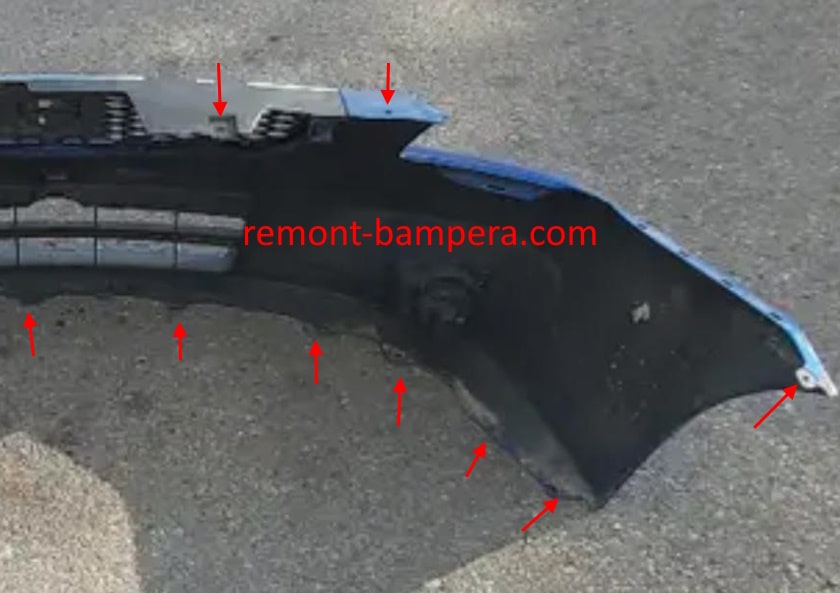
Nissan Sentra B16 (2006-2012) front bumper mounting locations

Nissan Sentra B16 (2006-2012) Front Bumper Mounting Diagram


How to Remove the Rear Bumper

⇒Useful tips on how to remove the bumper and not break anything.⇐

  1. Open the trunk lid.
  2. In the trunk, remove the rear and free the side trim panels.
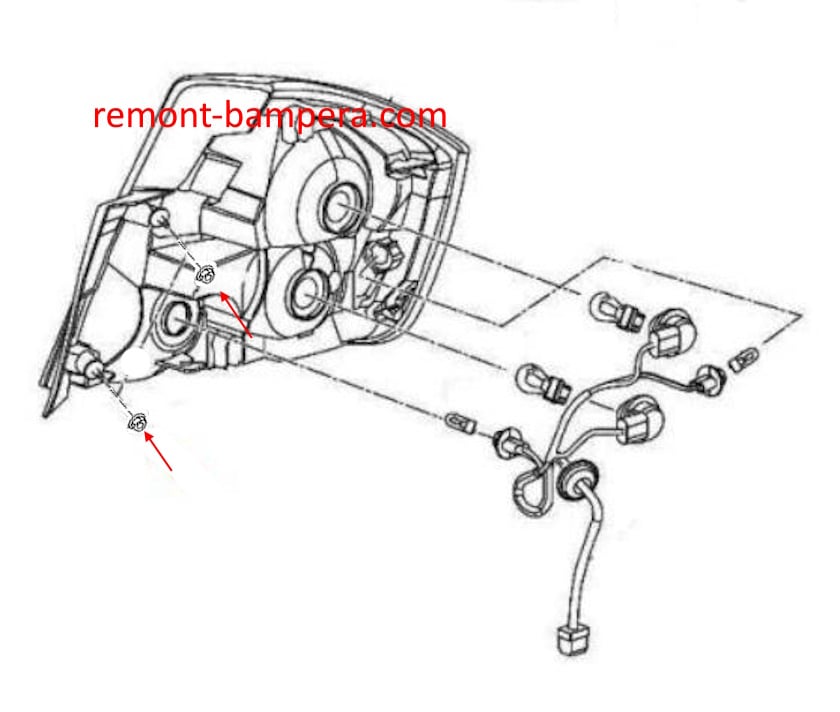
  3. Behind the trim panels, unscrew two nuts on each side and remove the taillights.
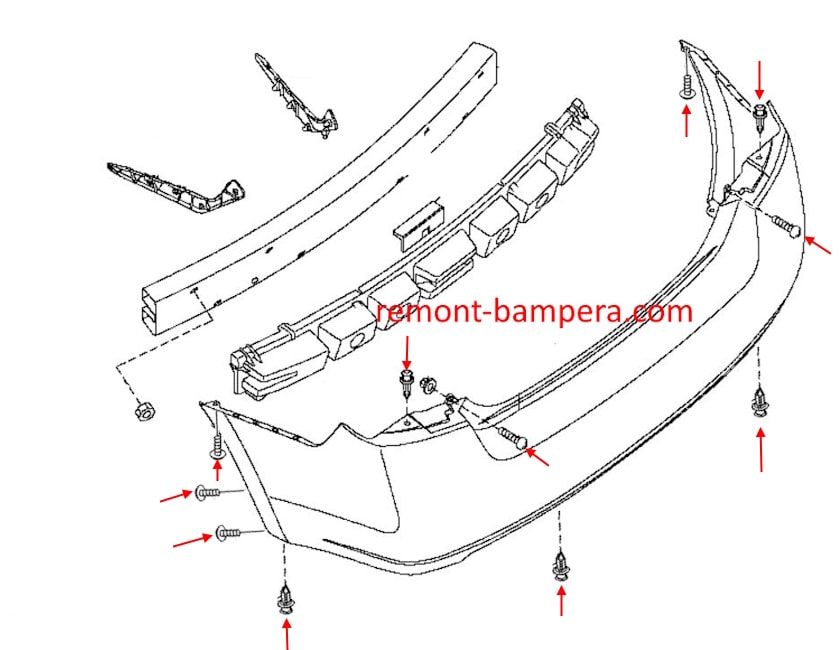
  4. Under the taillights, unscrew two screws and pull out two plastic clips that secure the top part of the rear bumper.
  5. From under the car, pull out four plastic clips (inserted from bottom to top) that secure the lower part.
  6. In the wheel arches, unscrew two screws on each side that secure the rear part of the fender liners.
  7. Behind the fender liners, unscrew one screw on each side (threaded from bottom to top) that secure the corners to the fenders.
  8. Release the clips in the fenders (pull the corners towards yourself).
  9. With an assistant, pull the bumper backwards (watch for wiring).
  10. Disconnect the electrical connectors (if present).

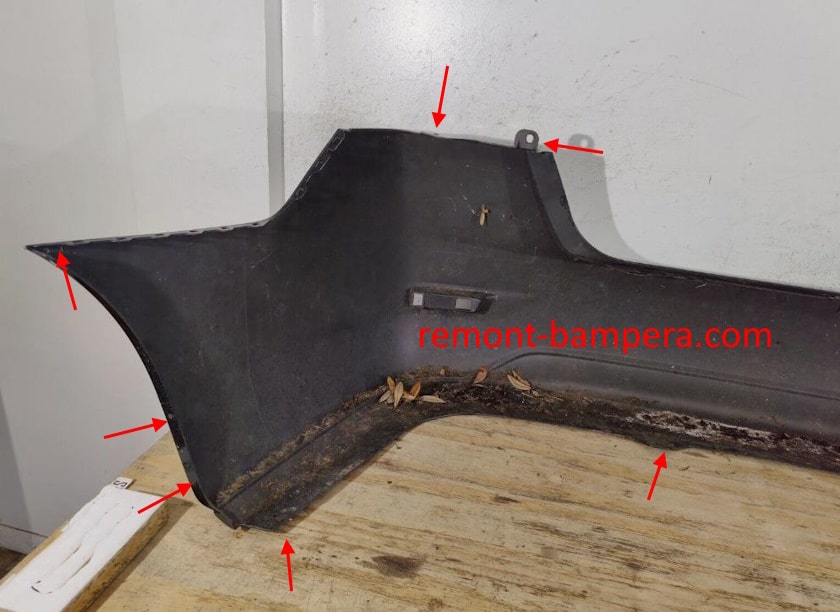
Nissan Sentra B16 (2006-2012) rear bumper mounting locations

Nissan Sentra B16 (2006-2012) Taillight Wiring Diagram

Nissan Sentra B16 (2006-2012) Rear Bumper Mounting Diagram


Interesting Facts

  • SE-R Model: The top sport version was equipped with a 2.5-liter QR25DE engine producing 200 hp and featured a sport suspension, a limited-slip differential, and disc brakes on all wheels.
  • CVT Pioneer: The Sentra B16 was one of the pioneers in introducing the CVT to the mass-market compact sedan segment in North America.
  • High Safety Rating: According to NHTSA (National Highway Traffic Safety Administration) crash tests, the 2007 model received the highest 5-star rating for frontal and side impact.
  • Qashqai Base: The use of a platform from crossovers explains the Sentra's high ground clearance and spacious interior.


Advantages and Disadvantages

  • Advantages:
    • Very spacious interior: especially in the rear row, which was a key advantage over competitors.
    • Smooth ride: The soft suspension handled road imperfections excellently.
    • Top fuel efficiency: With the CVT, the model showed good fuel consumption figures in the combined cycle.
    • Reliable powertrain: The MR20DE engine is known for its endurance and lack of serious inherent problems with timely maintenance.
    • Good level of equipment: Top trims offered xenon headlights, a navigation system, and leather interior.
  • Disadvantages:
    • CVT (Continuously Variable Transmission): The main "Achilles' heel" of this generation. Early Jatco CVTs (model RE0F10A) are prone to overheating, belt wear, and subsequent failures (vibrations, jerks, loss of thrust) after 150-200 thousand km (approx. 90-120 thousand miles). Require very meticulous fluid changes.
    • Sluggish dynamics: With the standard 2.0-liter engine and CVT, acceleration is very measured and "sluggish".
    • Boring handling: Significant body roll in corners, uninformative steering. The car is designed exclusively for calm driving.
    • Interior material quality: Although the design was modern, many hard, cheap plastics were used, which began to squeak with age.