Model Names and Production Years

The Nissan Navara D40 is a pickup truck generation manufactured from 2005 to 2021 at various plants around the world. It is important to know that this index covers several models:

  • Nissan Navara (the main name for markets in Europe, Asia, Australia).
  • Nissan Frontier (the name for the US and Canadian market from 2005 to 2021. The updated Frontier (from 2022) is already built on a new platform).
  • Nissan NP300 (often used to denote the facelifted version after 2015).


Model Description

The D40 succeeded the angular D22 and made a real revolution in its class. It was no longer just a utilitarian truck, but a vehicle claiming comfort and modernity.

  • Platform: Initially, the D40 used a common platform with the Nissan Pathfinder R51, emphasizing its orientation not only for work but also for active leisure.
  • Engines: The most common engines for our market were diesel:
    • YD25DDTi (2.5 L) — A 4-cylinder turbo diesel with power from 144 to 190 HP (depending on the version and year). The main power unit.
    • M9R (2.3 L) — A diesel engine from Renault, introduced after the facelift.
    • Gasoline engines (e.g., 4.0 L V6) were more popular in the USA and the Middle East.
  • Transmission: Both a 6-speed manual and a 5-speed (later 7-speed) automatic were available. Drive options were rear-wheel drive or switchable four-wheel drive.
  • A ladder frame construction and leaf spring rear suspension provided high load capacity (up to ~1 ton) and off-road capability.

How to Remove the Front Bumper

  1. Open the hood.
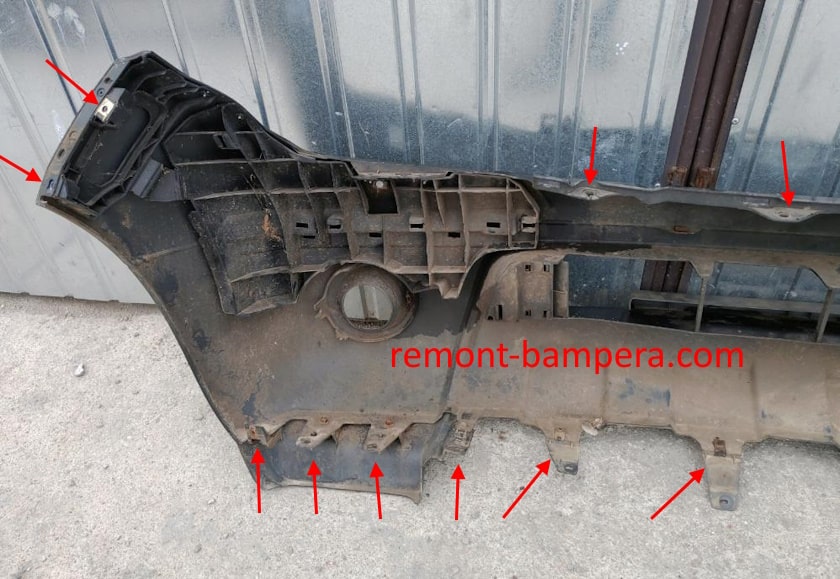
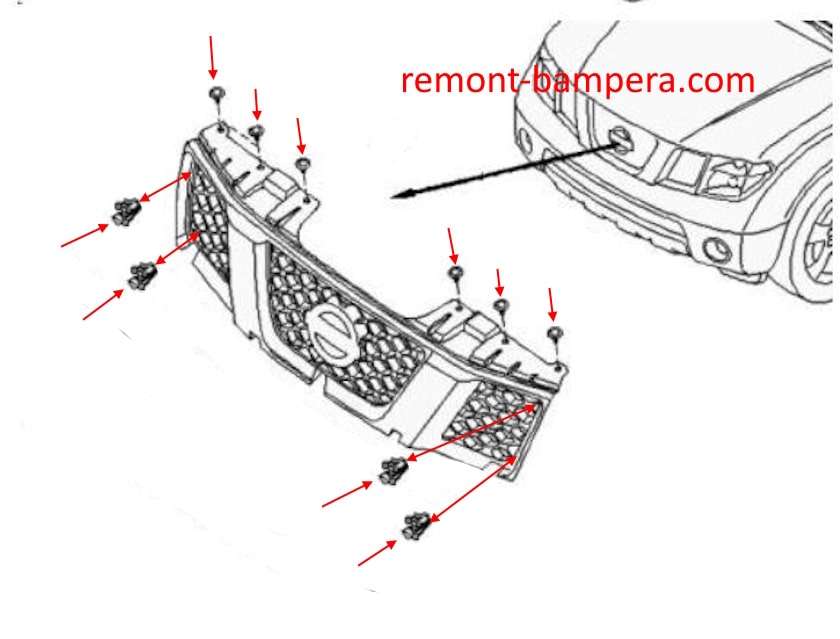
  2. Under the hood, remove the six plastic clips (push-pins) that secure the radiator grille.
  3. On the edges of the front part of the radiator grille, release four clips (clips with a square head; turn them 90 degrees with a flat-head screwdriver).
  4. Release from the clips and remove the radiator grille.
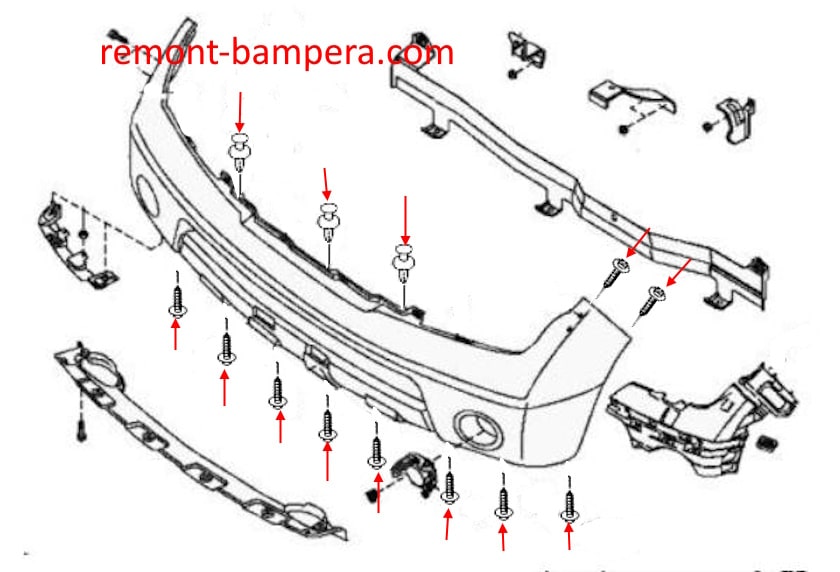
  5. Behind the radiator grille, remove three clips that secure the top part of the front bumper.
  6. From underneath the vehicle, unscrew the screws (fastened from bottom to top) that secure the lower part.
  7. Turn the wheels to the side.
  8. In the wheel arches, unscrew the screws and release the fender liners (front part).
  9. Behind the fender liners, unscrew two screws on each side that secure the bumper edges to the fenders.
  10. With an assistant, carefully pull the bumper forward (watch for wires and hoses).
  11. Disconnect the connectors for the fog lights (if equipped).
  12. Disconnect the hoses for the headlight washers (if equipped).

Front bumper mounting locations Nissan Navara D40

Nissan Navara D40 Radiator Grille Fastening Diagram

Nissan Navara D40 Front Bumper Mounting Diagram


How to Remove the Rear Bumper

⇒Useful tips on how to remove the bumper and not break anything.⇐

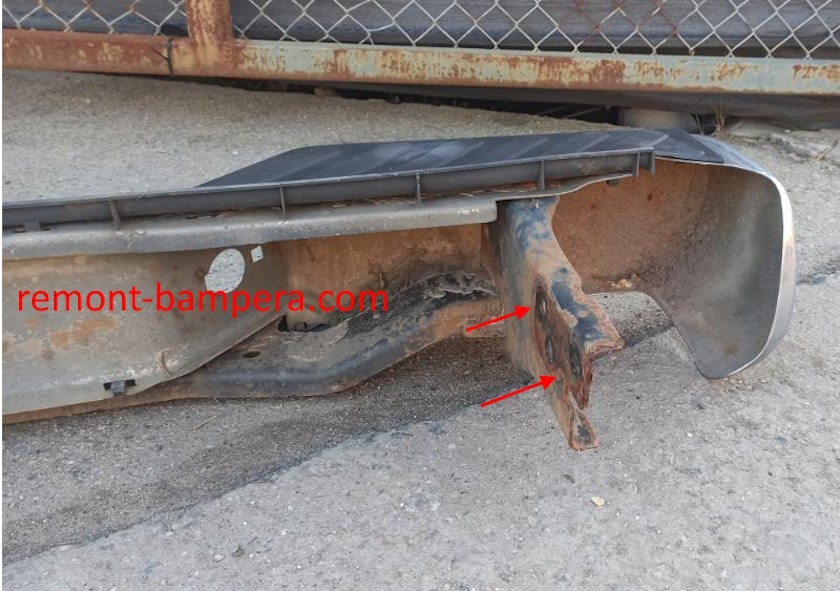
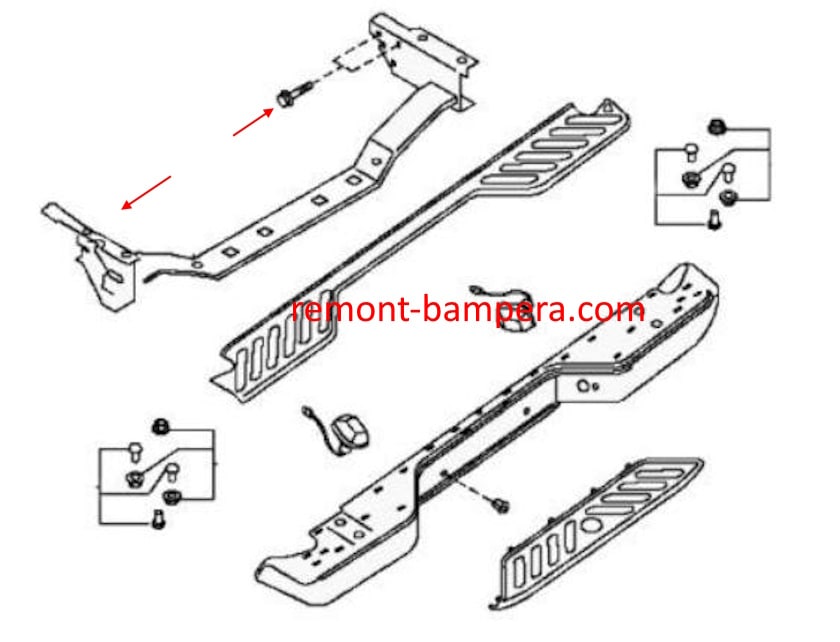
  1. To remove the rear bumper, unscrew the four bolts that secure the brackets to the frame.
  2. Before removal, disconnect the electrical connectors for the bumper equipment.
  3. Lie under the vehicle and use a socket wrench to unscrew the four bolts.
  4. With an assistant, pull the bumper backwards.

mounting locations of the rear bumper Nissan Navara D40

Nissan Navara D40 rear bumper mounting diagram


Interesting Facts

  • A "Luxury" Descendant: The Mercedes-Benz X-Class was built on the updated D40 platform (after 2015). This is a unique case where a premium German brand used the platform of a mass-market pickup truck.
  • Long-Liver: The D40 platform was in production for 16 years – an incredibly long time for a modern car, speaking to its success and reliability.
  • Dakar Rally: Modified versions of the Navara D40 repeatedly participated in the legendary Dakar rally marathon in the pickup class, demonstrating the endurance of its construction.


Advantages and Disadvantages

Advantages:

  • High reliability of the chassis and frame. The design is proven by time and high mileage.
  • Excellent practicality: Spacious double cab, huge cargo bed, high load capacity.
  • Comfort: Compared to competitors and its predecessor, the D40 interior was significantly more comfortable and modern.
  • Good tuning potential: A huge number of parts and ready-made solutions for improving off-road capability.

Disadvantages:

  • Issues with the YD25 engine: The main "con" of the model. The glow plugs on pre-facelift engines had an unfortunate location and often failed, requiring expensive repairs. Some examples had problems with the timing chain and injectors.
  • Rust: The body, especially the wheel arches and door sills, is prone to corrosion under aggressive use or insufficient maintenance.
  • Interior material quality: After 2015 and the introduction of the M9R engine, the overall build quality and interior plastics somewhat deteriorated to reduce costs.