Model Years and Model Code 

The second generation Nissan Xterra was produced from 2005 to 2015 for the North American market. The model code is N50. This generation replaced the first generation (WD22) and was built on an entirely new Nissan F-Alpha platform, which it shared with the Nissan Frontier, Pathfinder, and the Nissan Navara SUV for international markets.


Technical Specifications

  • Platform: Body-on-frame (ladder frame), providing high strength and off-road potential.
  • Engines:
    • 2005–2011: 4.0-liter V6 gasoline engine (VQ40DE). Power output: 261 hp (195 kW), torque: 381 Nm. This was a reliable and powerful engine, known for its torque.
    • 2012–2015: The same 4.0-liter V6, but with a minor revision (VQ40DE with variable valve timing). Power increased to 261 hp, and torque to 390 Nm.
  • Transmissions:
    • 5-speed automatic (RE5R05A)
    • 6-speed manual (FS6R31A) – offered until 2012 and was popular among enthusiasts.
  • Drivetrain: Rear-wheel drive (2WD) or part-time four-wheel drive (4WD). The off-road 4WD version was equipped with a two-speed transfer case (low range) and an electronic rear differential lock.
  • Suspension: Front – independent double wishbone. Rear – solid axle on leaf springs. A time-tested configuration for severe conditions and towing.

How to Remove the Front Bumper

  1. Open the hood.
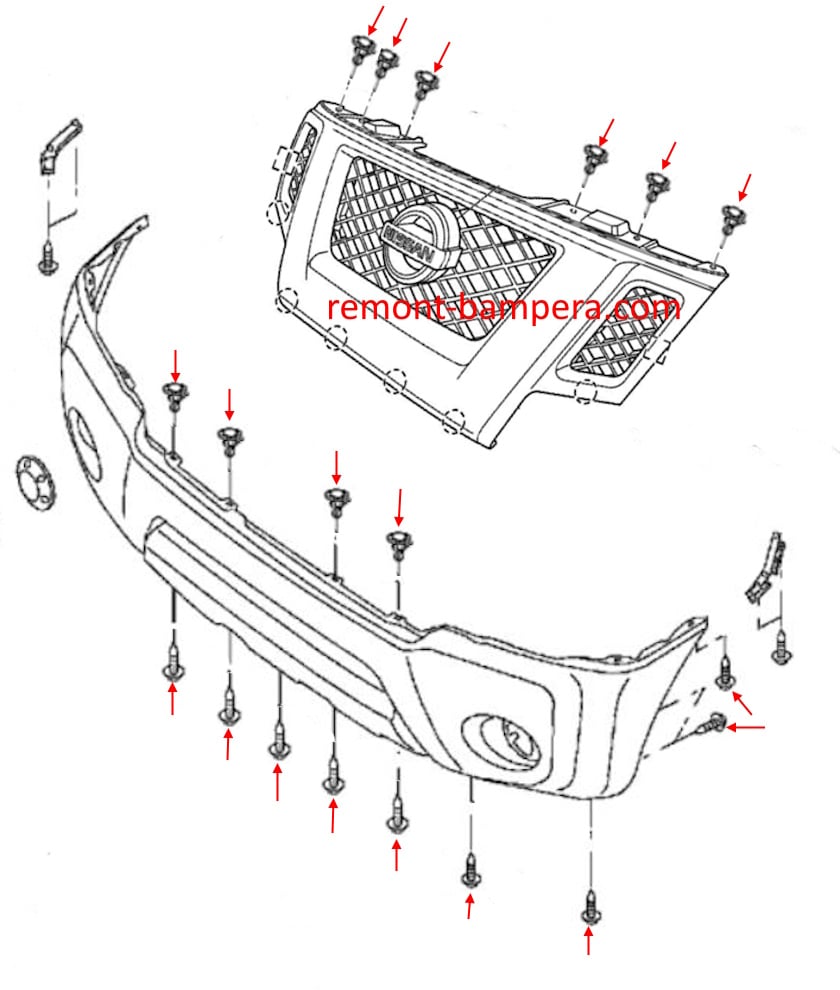
  2. Under the hood, remove six plastic push-pins and detach the radiator grille (it is held by clips at the bottom). Alternatively, you can reach your hand between the grille and the radiator to remove four push-pins; then you won't need to remove the grille.
  3. Behind the radiator grille, remove four push-pins (inserted from top to bottom).
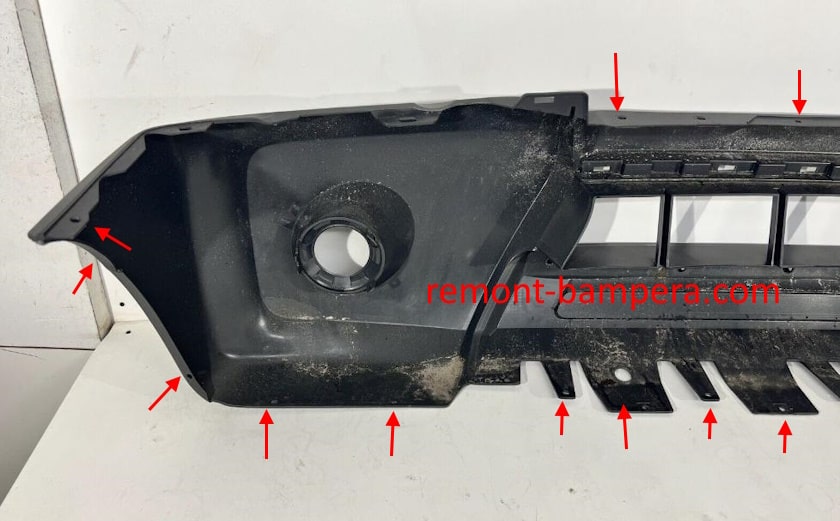
  4. From underneath the vehicle, unscrew the bolts that secure the lower part of the bumper, the fender liners, and the engine skid plate.
  5. Turn the wheels to the side.
  6. In the wheel arches, unscrew two bolts on each side and detach the front part of the fender liners.
  7. Push the fender liners aside and unscrew one bolt on each side (fastened from bottom to top) that secure the bumper corners to the fenders.
  8. Release the clips in the fenders (pull the corners towards you).
  9. Release the clips under the headlights.
  10. With an assistant, carefully pull the bumper forward (make sure not to tear any wires).
  11. Disconnect the electrical connectors (if present).

Nissan Xterra II (2005-2015) front bumper mounting locations

Nissan Xterra II (2005-2015) Front Bumper Mounting Diagram


How to Remove the Rear Bumper

⇒Useful tips on how to remove the bumper and not break anything.⇐

  1. Open the tailgate.
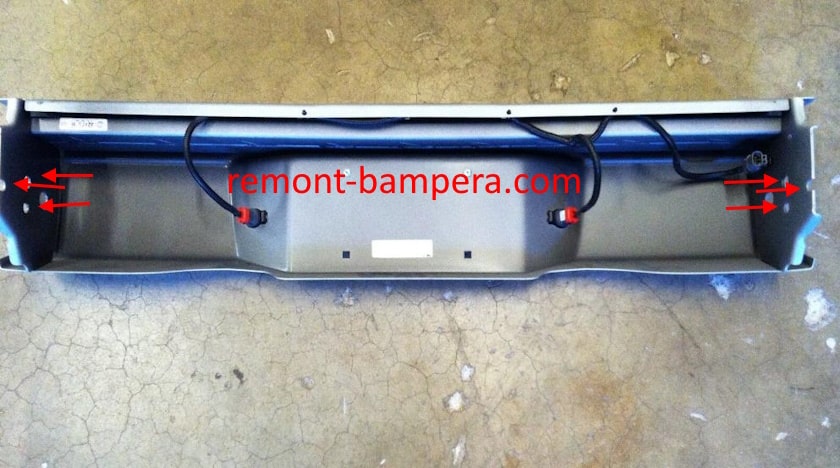
  2. In the tailgate opening, unscrew four bolts that secure the side sections.
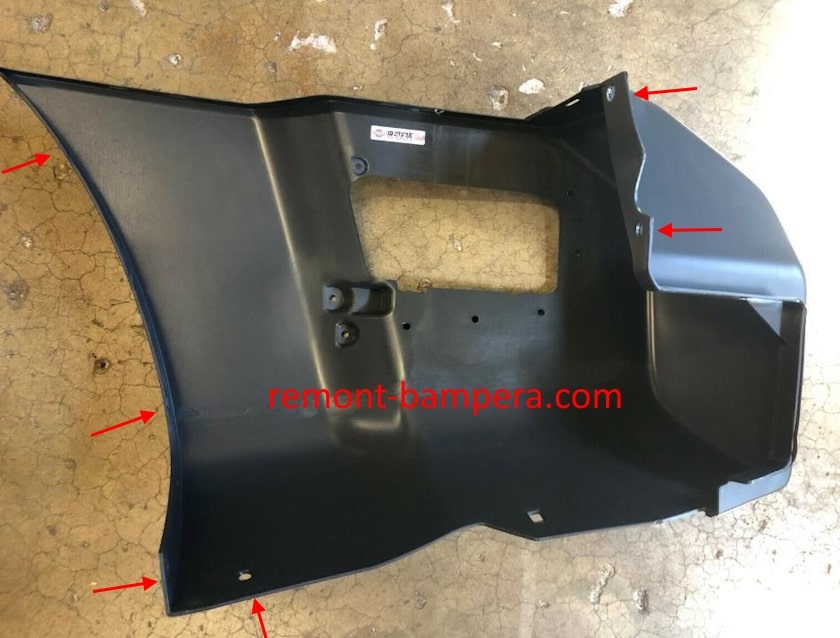
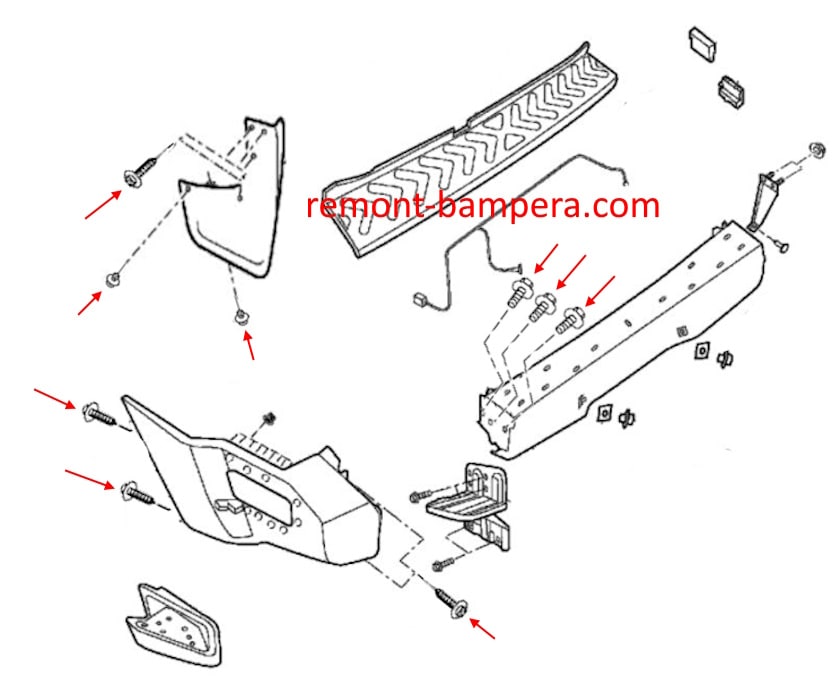
  3. In the wheel arches, unscrew six bolts, remove four plastic push-pins, and detach the mudguards/splash shields.
  4. Behind the mudguards, unscrew two bolts on each side, release from the clips in the fenders, and remove the side sections of the rear bumper.
  5. Disconnect the electrical connectors.
  6. From underneath the vehicle, unscrew six bolts and remove the center section of the bumper.

Nissan Xterra II rear bumper mounting locations (2005-2015)

Nissan Xterra II rear bumper mounting locations (2005-2015)

Nissan Xterra II (2005-2015) Rear Bumper Mounting Diagram


Interesting Facts

  • "All-Weather Trunk": The rear glass could be opened independently of the tailgate, which was extremely convenient for loading small items when parked.
  • Deep Factory Protection: From the factory, the Xterra had plastic rocker panel protection and front/rear plastic bumpers, which reduced the risk of damage during light off-roading.
  • Utilitarian Interior: The plastic trim on the rear wheel arches had built-in compartments for water bottles or small items. The cargo floor was two-sided – one side had carpet, the other was durable plastic that could be washed.
  • SMOD Problem (Strawberry Milkshake Of Death): Xterras and Frontiers from 2005-2009 with automatic transmissions had a known issue: the transmission cooler, integrated into the radiator, could develop a leak, leading to mixing of coolant and transmission fluid. The mixture resembled a strawberry milkshake in consistency and color and would reliably disable the automatic transmission. The solution was to install a separate transmission cooler.


Advantages

  • Outstanding Reliability: With timely maintenance (and addressing the SMOD issue), the powertrain and chassis were renowned for their longevity.
  • Exceptional Off-Road Capability: Short overhangs, high ground clearance, a powerful engine, and an available differential lock made it one of the best in its class "out of the box."
  • High Functionality: Simple and logical design, body-on-frame construction, and a powerful engine allowed it to tow up to 2268 kg (5000 lbs).
  • Spacious Interior: Roomy cabin for 5 people, huge cargo area.

Disadvantages

  • High Fuel Consumption: The powerful 4.0-liter engine and brick-like aerodynamics led to high fuel consumption (average 14-16 L/100 km in the city).
  • Outdated Design: By the end of its production run, the interior design and technology looked archaic compared to competitors with unibody construction and modern electronics.
  • Stiff Suspension: The leaf spring rear suspension provided load capacity but offered average comfort on asphalt.
  • Exhaust Manifold Butterfly Valve Sticking (2005-2009): The manifold had a butterfly valve designed to reduce noise at low RPMs. Its shaft could become carbonized and break over time, leading to power loss and expensive repairs.


Verdict:

The Nissan Xterra II (N50) is an iconic, honest, and incredibly capable SUV designed for outdoor recreation and use in severe conditions. Its main strengths are reliability and off-road capability, while its main weaknesses are high fuel appetite and Spartan comfort.