Model Years and Facelifts:
The Nissan Patrol Y61 is a legendary body-on-frame SUV that succeeded the Y60 model. Its production started in 1997 and continues to this day, which is a unique case in the modern automotive industry.
Key milestones of its facelifts:
- 1997–2010: Production of the original body for the global market.
- 2010: The first major facelift. Changes affected the front end: new headlights, grille, bumper, and hood. The interior received a new steering wheel and a multimedia system.
- 2013 and 2016: Subsequent updates were less global and mainly affected trim levels, color schemes, and minor exterior details.
- 2020: Another facelift for the markets of the Middle East and Australia. The Y61 received completely new front headlights in the style of the Nissan Patrol Y62, a different grille, and a modern multimedia system with a large screen.
Important: In Europe and some other markets, sales of the Y61 were discontinued in the 2010s due to tightening environmental regulations.
Model Description
The Patrol Y61 is the benchmark for a classic SUV. Its design is time-tested:
- Frame: A sturdy ladder frame ensures the highest strength and endurance.
- Suspension: Independent front torsion bar suspension and a solid rear axle on leaf springs. A design focused on reliability and off-road articulation.
- Engines: The most well-known are the inline 6-cylinder gasoline engines: the naturally aspirated TB48DE with a displacement of 4.8L (up to ~280 hp) and the turbo diesel RD28ETi (3.0L). However, the "heart" and legend of the Y61 became the TD42T turbo diesel – an inline six with a displacement of 4.2L and a cast-iron block, renowned for its incredible reliability and a lifespan of over a million kilometers. Later, for some markets, the ZD30 diesel engine (3.0L Common Rail) appeared.
- Transmission: 5-speed manual or 4-speed automatic (later 5-speed automatic). Full-time four-wheel drive with a low-range transfer case and a manual locking center differential.
How to Remove the Front Bumper
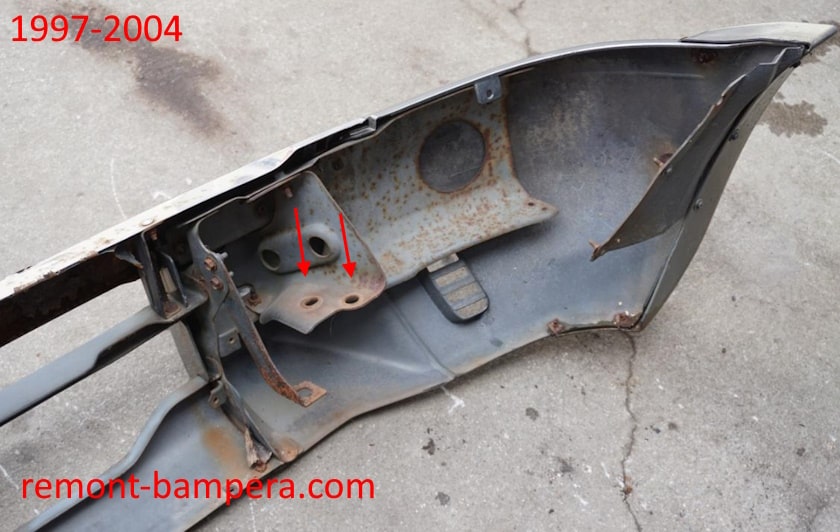
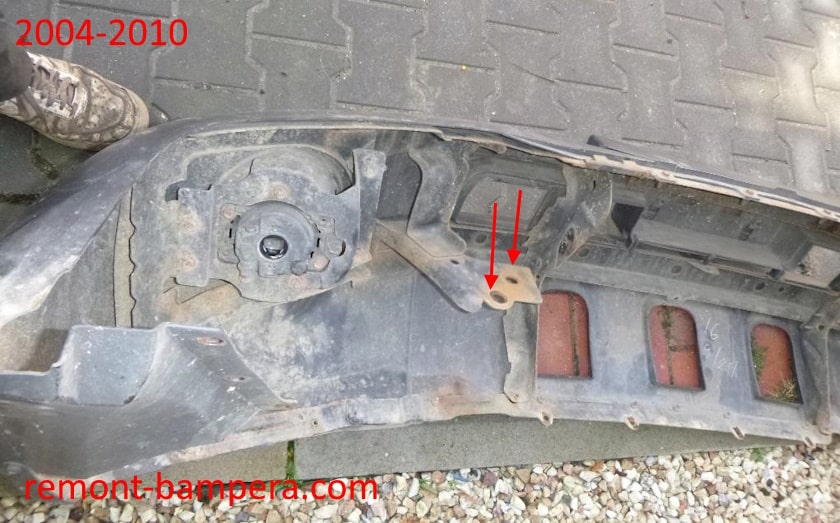
The bumper is removed together with the metal reinforcement bar.
- Open the hood.
- Disconnect the connectors of the fog lights.
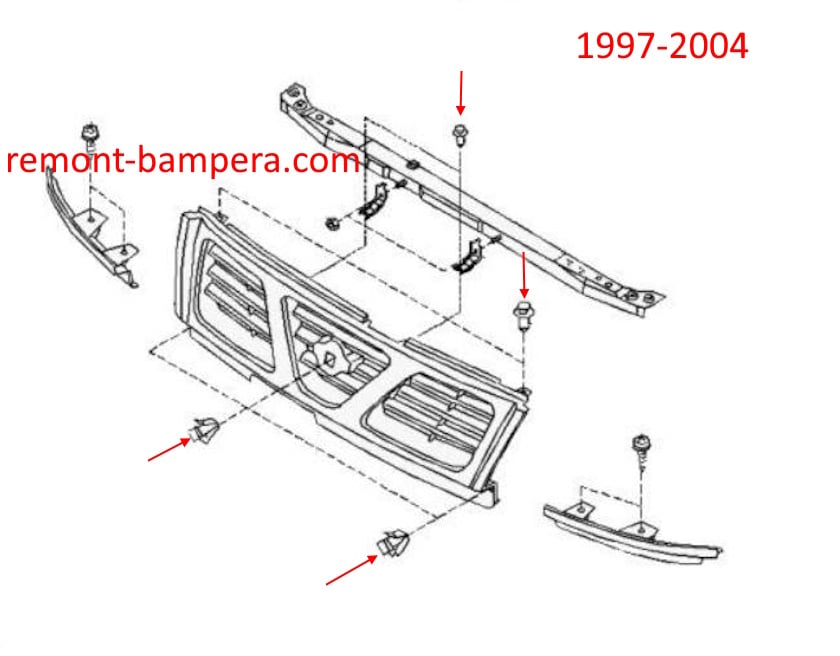
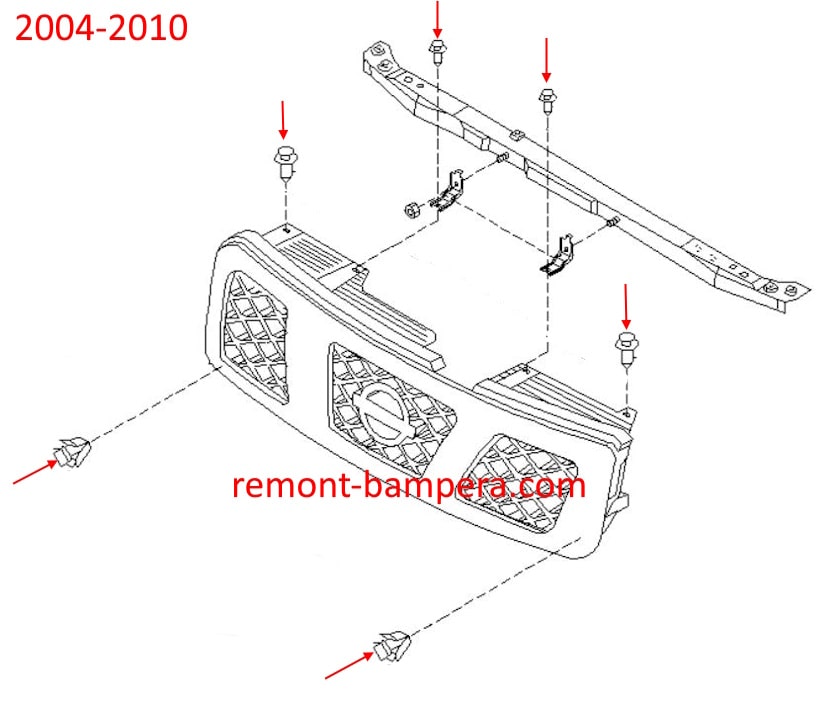
- Under the hood, remove the four plastic push-pin clips (inserted from top to bottom) that secure the grille.
- On the front face, release the fasteners (use a flathead screwdriver to turn them 90 degrees) and remove the grille.
- In the opening between the bumper and the radiator, unscrew the four bolts (threaded from top to bottom) that secure the reinforcement bar to the body.
- Carefully pull the bumper forward with an assistant.


How to Remove the Rear Bumper
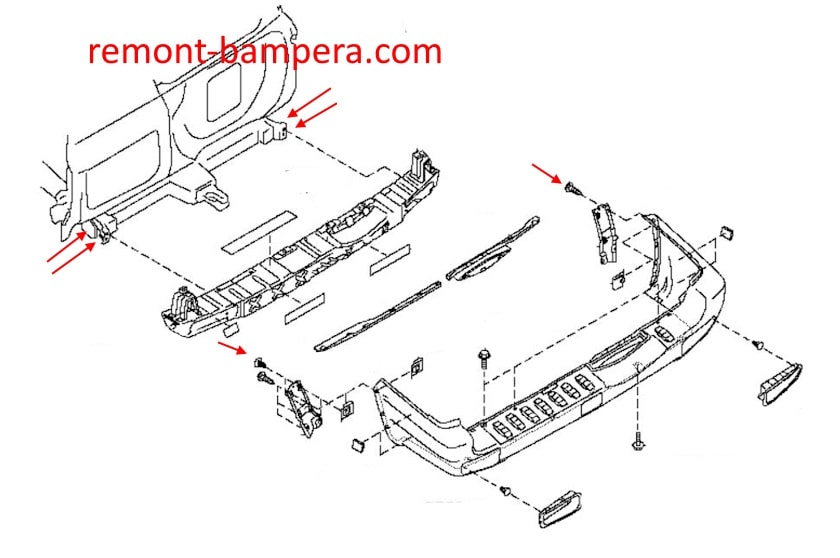
- Disconnect the electrical connectors (if equipped).
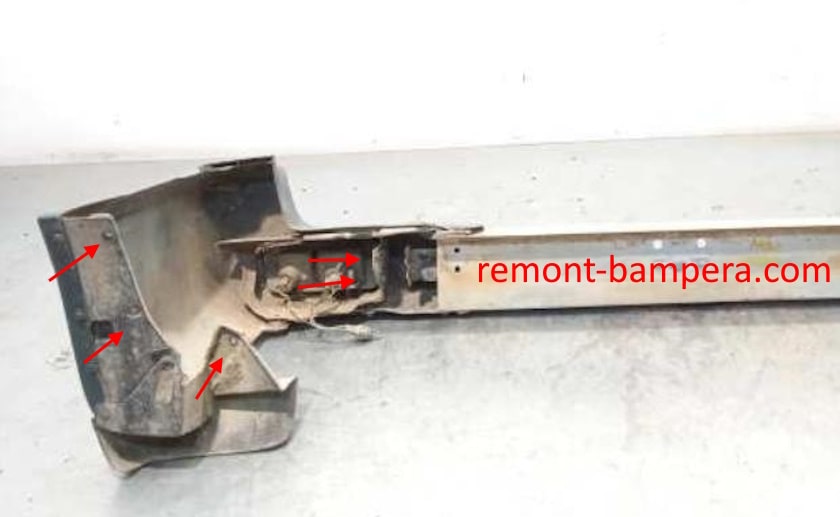
- In the wheel arches, unscrew the screws that secure the sides of the rear bumper.
- From underneath the vehicle, unscrew the four bolts that secure the metal bumper reinforcement to the body (a socket with a breaker bar will be needed).
- Pull the bumper backwards with an assistant.


Interesting Facts
- A Living Legend: The Y61 is still officially produced at the Nissan plant in Japan for the markets of the Middle East, Australia, and Africa.
- Military Service: Thanks to its durability, the Y61 (often in simplified versions) is used by the armies of many countries in the Middle East and Asia.
- Cult Status: In the Middle East, the Patrol Y61 pickup truck (often called "Safari") is the basis for extreme off-roading and dune bashing. Powerful modified versions participate in famous rally raids.
- Direct Competitor: Throughout its production period, its main and only direct competitor was the Toyota Land Cruiser 70 Series.
Advantages and Disadvantages
Advantages:
- Phenomenal Reliability: The simplicity of its design and its safety margin make it one of the most reliable SUVs in history.
- Excellent Off-Road Capability: Short overhangs, high articulation, powerful engines, and a reliable transmission.
- Repairability: The Y61 can literally be fixed "with simple tools in a garage" anywhere in the world.
- High Longevity: Properly maintained specimens, especially those with TD42 and TB48 engines, run for hundreds of thousands of kilometers without major problems.
- High Resale Value: Due to its status and reliability, good Y61 models have very high residual value.
Disadvantages:
- Outdated Design: Comfort, sound insulation, dynamics, and fuel efficiency cannot be compared to modern crossovers and SUVs.
- High Fuel Consumption: Especially for gasoline versions (from 18-20 L/100 km in the city).
- Primitive Interior: The quality of materials and ergonomics correspond to the standards of the late 1990s, even after facelifts.
- On-Road Handling: On asphalt, it behaves like a classic body-on-frame vehicle: body roll in corners, imprecise steering.
- Ecology: Does not meet modern environmental standards (Euro-5 and above).
Italiano
Français
русский
English
Deutsch
Español