Model Description: Nissan Murano Second Generation (Z51, 2007–2014)
This generation debuted in 2007 for the US market and appeared in Russia in 2008. It was radically different from the first generation with its futuristic design, which divided the public into two camps: some saw it as an "iron on wheels," while others saw it as a bold and stylish move.
Key Characteristics:
- Design: Unique body shape with a high and short rear end, V-shaped hood line rising towards the windshield pillars. The taillights became vertical.
- Platform: The model is built on the front-wheel-drive Nissan D platform, which it shared with the Nissan Altima and Maxima.
- Engine and Transmission: The only engine for all markets was the well-proven 3.5-liter gasoline V6 (VQ35DE). Its power varied from 265 to 272 hp. It was paired with an Xtronic continuously variable transmission (CVT) — one of the first mass-produced CVT transmissions in the SUV class.
- Drivetrain: Standard front-wheel drive (2WD), with optional all-wheel drive (4WD) with an electronically controlled coupling.
- Interior: The interior became more high-quality and technologically advanced. Options included a panoramic glass roof, a two-section glass moonroof without a center crossbar (on some trims), a rearview camera, leather upholstery, heated seats and steering wheel.
Bumper Plastic Marking >PP+EPM-T15<
How to Remove the Front Bumper
- Open the hood.
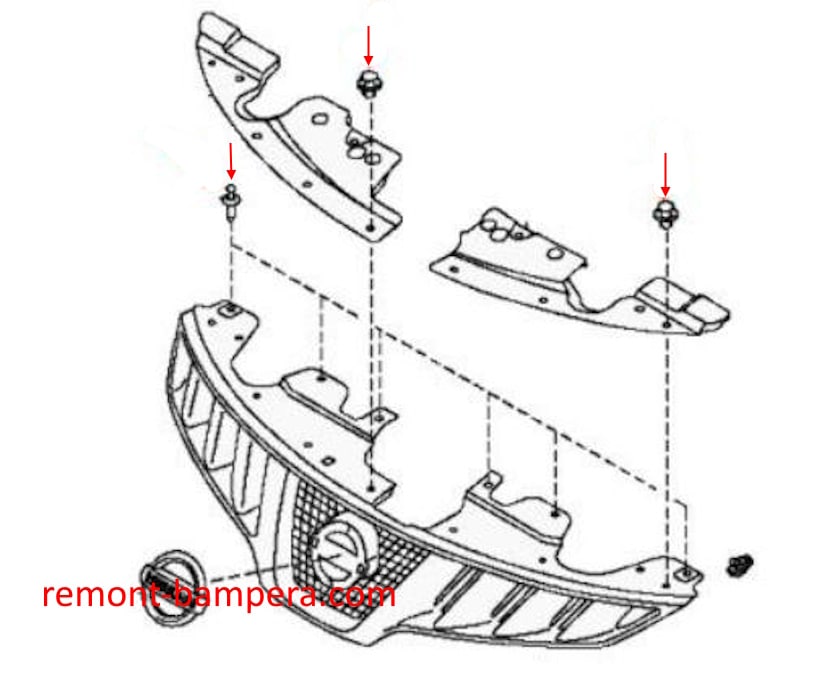
- Under the hood, remove the plastic rivets (pistons) that secure the covers.
- Under the covers, remove the rivets and take off the radiator grille (held by clips).
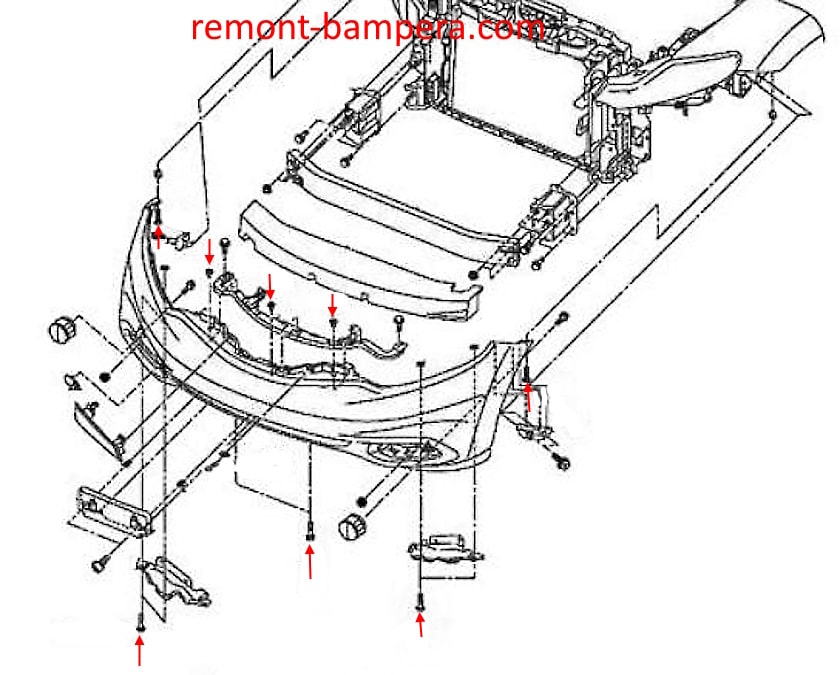
- Under the radiator grille, remove the rivets.
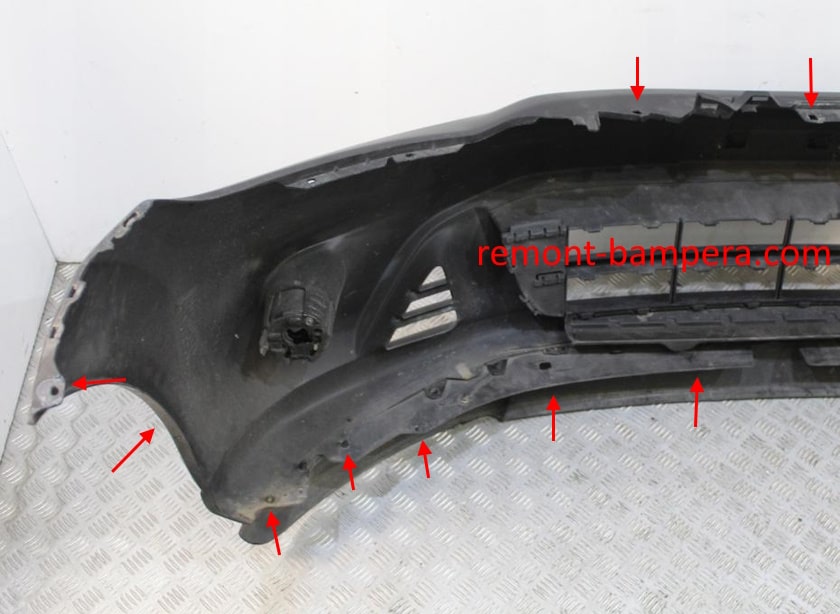
- In the lower part of the bumper, remove the rivets and unscrew the screws (they are screwed in from bottom to top).
- Turn the wheels left or right, depending on which side you are working on.
- In the wheel arches, unscrew the screws and remove the rivets that secure the fender liners (splash shields).
- Move the fender liners aside and unscrew one screw on each side (screwed from bottom to top) that secure the bumper to the fenders.
- With an assistant, release the clips in the fenders and carefully pull the bumper towards you.
- Disconnect the connectors from the fog lights (if equipped).
- Disconnect the connectors from any additional electronic equipment (if present).


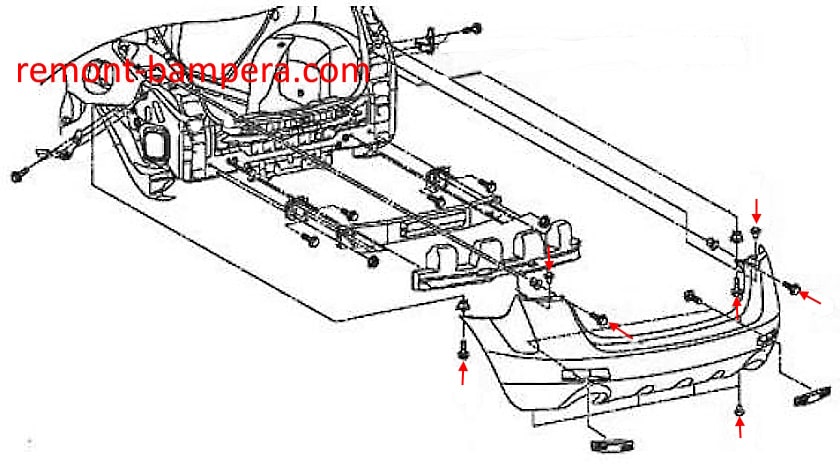
How to Remove the Rear Bumper
- Open the trunk lid.
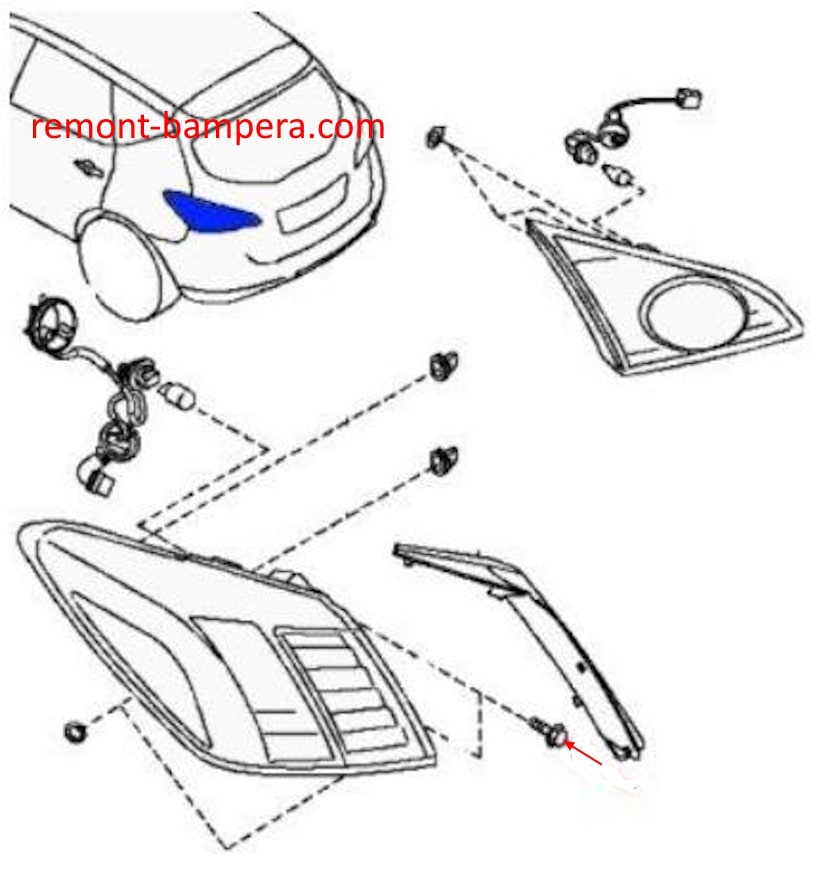
- In the trunk opening, remove the decorative covers on the sides of the taillights.
- Under the covers, unscrew two screws on each side that secure the taillights.
- Remove the taillights (held by clips) and remove one rivet under each of them on each side.
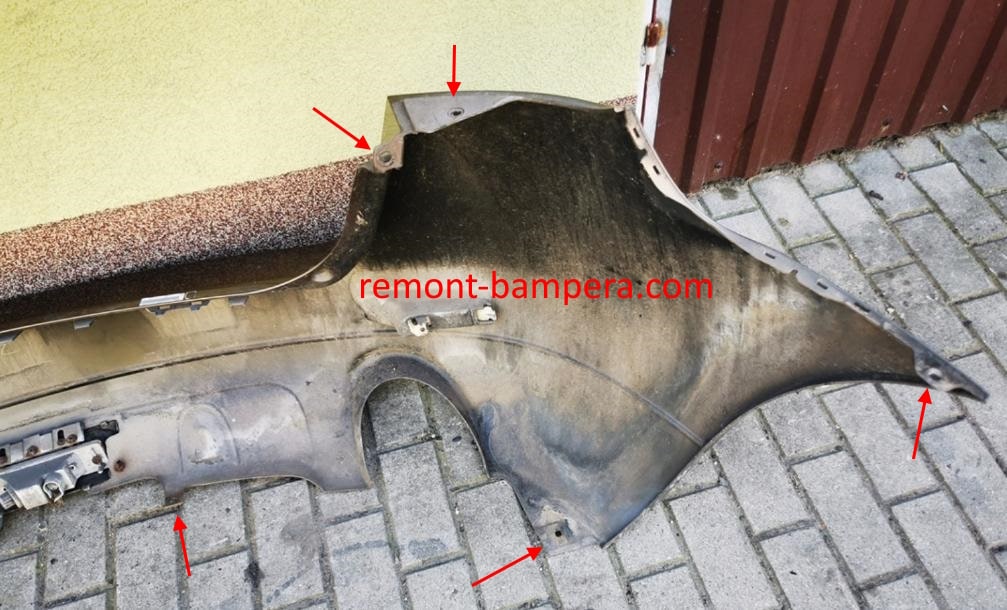
- Unscrew one screw in each corner of the trunk opening.
- Remove the rivets and unscrew the screws around the perimeter in the lower part of the bumper (they are screwed in from bottom to top).
- In the wheel arches, unscrew the screws and remove the rivets that secure the fender liners (splash shields).
- Move the fender liners aside and unscrew one screw on each side that secure the bumper corners to the fenders (screwed from bottom to top).
- With an assistant, release the bumper from the clips in the fenders and carefully pull it towards you.
- Disconnect the connectors from any electronic equipment (if equipped).


Advantages and Disadvantages
Advantages (+):
- Style: Stood out against the "faceless" competitors like the Toyota Highlander or Honda Pilot.
- Driving Qualities: Soft, comfortable suspension that handles bumps excellently. The V6 provides confident, smooth power.
- Comfort and Equipment Level: Spacious interior, especially for front passengers. Quiet noise insulation. Rich equipment for its time.
- Engine Reliability: The naturally aspirated V6 VQ series engine is one of the most reliable and serviceable Nissan engines.
Disadvantages (-):
- CVT Transmission: The main "Achilles' heel" of this generation. Early CVTs (approximately until 2010-2011) were prone to overheating, jerking, and premature failure. The problem often required costly replacement.
- Fuel Consumption: For a 3.5-liter naturally aspirated engine, fuel consumption is quite high: in the city, it easily reaches 14-15 l/100 km.
- Expensive Maintenance: Parts and repairs, especially for the transmission, are not cheap.
- Outdated Navigation/Multimedia: By modern standards, the system is extremely slow and inconvenient.
Interesting Facts
- First of its Kind: The original Murano (2002) is considered one of the first mass-produced "crossover" SUVs that challenged traditional body-on-frame SUVs.
- Murano CrossCabriolet: Based on this second generation (Z51) in 2010, the world's only 4-door convertible crossover was created — an eccentric and extremely rare car.
- Popularity on the Used Market: Despite the risks associated with the CVT, this generation is in demand due to its unique design, comfort, and affordable price. It is recommended to buy examples from after 2011-2012 with a replaced or verified CVT.
Italiano
Français
русский
English
Deutsch
Español