Production Years: The Nissan Primera P11 was produced from 1996 to 2002. It was the second generation of the model, replacing the P10. In 1999, the model underwent a facelift (conventionally known as P11-144), which affected both its appearance and technical aspects.

Model Description

The Primera P11 was radically different from its predecessor. While the P10 was angular and conservative, the P11 received smooth, streamlined body shapes in the spirit of the times, designed at Nissan's European design center.

Body: 

Available in three variants: 4-door sedan (P11), 5-door hatchback (WP11), and 5-door station wagon (RP11). The station wagon, in particular, was valued for its huge trunk for its class and practicality.

Interior: 

The interior was of high quality with well-thought-out ergonomics. The main feature was the driver-oriented center console: all the main controls (radio, climate control) were tilted towards the driver for ease of use. This was a unique solution in its class.

Technical Specifications:

  • Engines: Gasoline inline 4-cylinder engines with a displacement of 1.6L (SR16DE, ~100 hp), 1.8L (SR18DE, ~114 hp), and 2.0L (SR20DE, ~140 hp). A 2.0L diesel (CD20, ~75 hp) was also offered.
  • Transmission: 5-speed manual or 4-speed automatic.
  • Platform: Front-wheel drive layout. The main trump card was the suspension: a multi-link rear setup (Multi-Link Beam) instead of the simpler semi-dependent torsion beam used by competitors. This provided exceptional straight-line stability and sharp handling, close to that of sports sedans.

1999 Facelift: 

The model received new bumpers, a radiator grille, headlights with clear lenses, and taillights. The dashboard was updated inside. Technically, an electronic throttle (Drive-by-Wire) was introduced for the 2.0L engine, along with the option to order an electronic stability program (ESP).


Bumper plastic marking >PP+EPDM-T20<


Mounting points may vary depending on the year of manufacture.

How to Remove the Front Bumper

  1. First, open the hood.
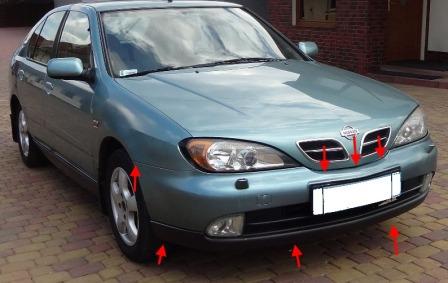
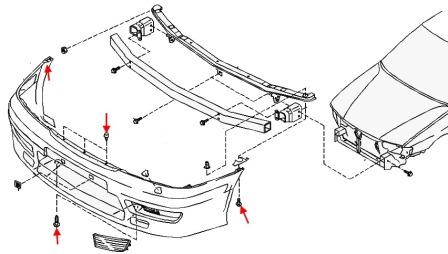
  2. Between the headlights, remove three clips that are inserted from top to bottom and secure the top side of the front bumper.
  3. Move to the bottom side, unscrew two bolts and remove six clips that are screwed and inserted from bottom to top.
  4. Now move to the wheel arches. Free the fender liners from the bumper and unscrew the bolts behind them that secure the bumper corners to the fenders.
  5. With an assistant, remove the bumper forward from the guide brackets.
  6. Disconnect the connectors from the running lights.

Nissan Primera P11 Front Bumper Mounting Locations

Nissan Primera P11 Front Bumper Mounting Diagram


How to Remove the Rear Bumper

⇒Useful tips on how to remove the bumper and not break anything.⇐

  1. If the license plate illumination lights are installed in the bumper, they need to be pulled out and their power connectors disconnected.
  2. Lift the trunk lid up.
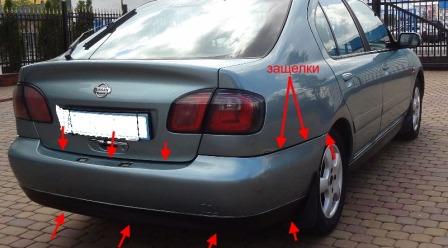
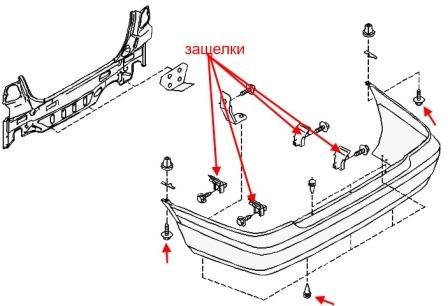
  3. Remove the three (or four) clips that secure the top side of the rear bumper.
  4. Now move to the bottom side and remove five clips there (there may also be two screws).
  5. In the wheel arches, move the fender liners aside and unscrew one bolt on each side, which are screwed from bottom to top and secure the bumper corners to the fenders.
  6. Free the sides from the retainers in the fenders and remove the bumper backwards.

Nissan Primera P11 rear bumper mounting locations

Nissan Primera P11 rear bumper mounting diagram


Interesting Facts

  • A "Japanese" with a European Soul: The P11 was completely designed and developed in Europe (primarily in the UK) specifically for the European market, which explains its outstanding handling.
  • Racing Success: The Primera BTCC (British Touring Car Championship) modification dominated the British touring car championship, which was directly used in marketing and confirmed the car's sporting character.
  • High-Strength Body: For its time, the P11 body had a very high torsional rigidity, which was rare in its class and formed the basis for excellent handling.


Advantages and Disadvantages

Advantages:

  • Handling: Phenomenal for a front-wheel drive sedan. Precise steering, grippy suspension, excellent feedback. Even today, many examples feel taut and fun to drive.
  • Reliability: The design is proven; the SR-series engines (especially the 1.8 and 2.0) are known for their robustness and durability with timely maintenance.
  • Practicality (Station Wagon): The RP11 station wagon is incredibly spacious and convenient.
  • Comfort: The suspension is soft enough for daily driving and absorbs bumps well.

Disadvantages:

  • Rust: The main and most serious enemy of the P11. The sills, wheel arches, trunk lid, and suspension components are particularly vulnerable. A thorough underside inspection is necessary when purchasing.
  • Age: All examples are over 20 years old. Problems with aging electronics (engine control unit, sensors), wear of interior plastic (cracks on the dashboard), and drying out of seals are inevitable.
  • Fuel Appetite: The 2.0L engine can consume up to 12-13 liters per 100 km in the city cycle.
  • Performance: Even the 140-hp version is not fast by modern standards. The smaller 1.6L engines are rather "sluggish".