The eighth generation Mitsubishi Galant, internal code A7A. Its production continued from 1996 to 2003 in Europe and until 2006 in the USA. In 2003, it was directly replaced in Europe by the Mitsubishi Lancer Sedan.

Technical Specifications (based on key modifications)

The Galant VIII was offered with a wide range of engines, but the following are most typical for Europe:

Engines:

  • 1.8 GDI (4G93): 125 hp. The most innovative and yet problematic engine. It used Gasoline Direct Injection technology to increase power and fuel efficiency. It required high-quality fuel and careful maintenance.
  • 2.0 V6 (6A12): 150 hp (for 4WD versions) and 155 hp (for FWD). The 2.5-liter V6 was not supplied to Europe for this generation. This was one of the most compact and lightweight V6 engines of its time, providing very smooth and quiet operation.
  • 2.0 DI-D (4D68): 102 hp. One of the first diesel engines in its class with a Common Rail system (from Bosch). It was distinguished by high fuel efficiency and torque for a diesel of that time.

Transmission:

  • 5-speed manual transmission.
  • 4-speed automatic transmission with manual mode (INVECS-II).

Drivetrain: Front-wheel drive (FWD) or all-wheel drive (4WD) — for V6 versions and some diesel models.

Platform and Suspension:

  • Front suspension: Independent, double wishbone.
  • Rear suspension: Multi-link.
    This design provided excellent stability and precise handling by business class standards.


Bumper Plastic Marking: >PP-E/P<


Depending on the year of manufacture, the mounting points may differ.

How to Remove the Front Bumper

  1. Open the hood.
  2. Under the hood, release from the fasteners and remove the radiator grille.
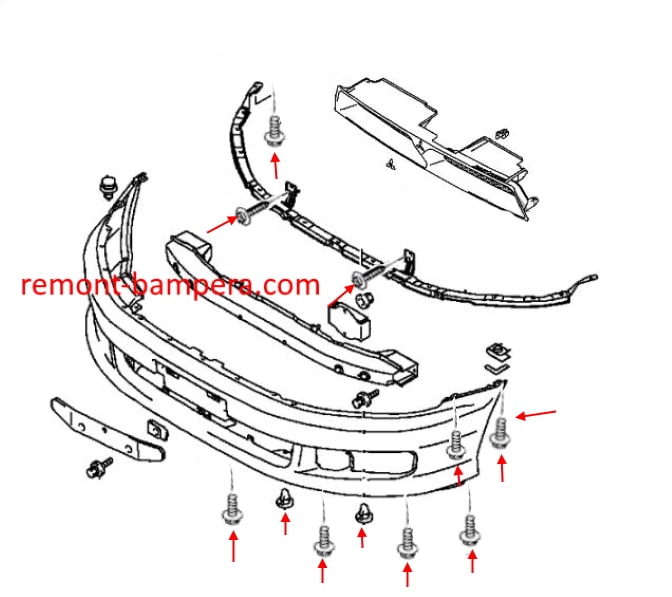
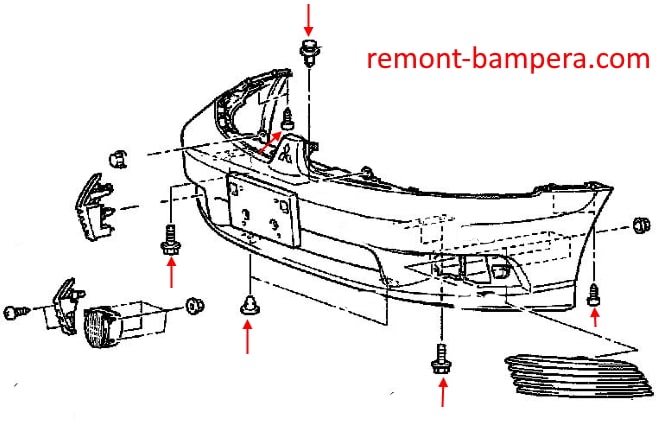
  3. Under the radiator grille, unscrew the bolts that secure the top part of the bumper (the metal reinforcement bar).
  4. (If present) From the engine compartment side, unscrew the four bolts that secure the bumper reinforcement to the body (threaded from bottom to top).
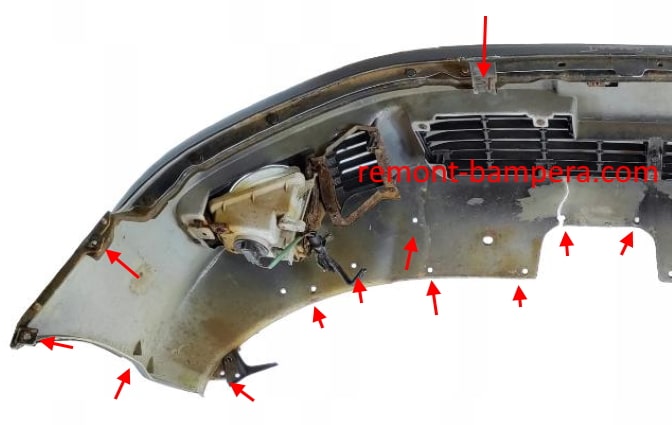
  5. From under the car, remove the plastic clips and unscrew the bolts that secure the lower part to the undertray and fender liners.
  6. Turn the wheels, depending on which side you are working on.
  7. In the wheel arches, unscrew the bolts that secure the fender liners (front part).
  8. Move the fender liners aside and unscrew two bolts on each side that secure the bumper corners to the fenders.
  9. With an assistant, carefully pull the bumper forward (mind the wires).
  10. Disconnect the electrical connectors (if present).

Mitsubishi Galant VIII (1996-2006) front bumper mounting locations

Mitsubishi Galant VIII (1996-2006) Front Bumper Mounting Diagram

Mitsubishi Galant VIII (1996-2006) Front Bumper Mounting Diagram


How to Remove the Rear Bumper

⇒Useful tips on how to remove the bumper and not break anything.⇐

  1. Open the trunk lid.
  2. Remove the side trunk trim panels.
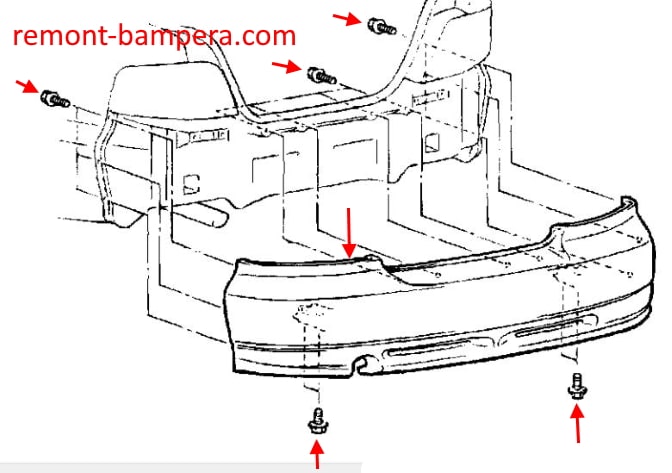
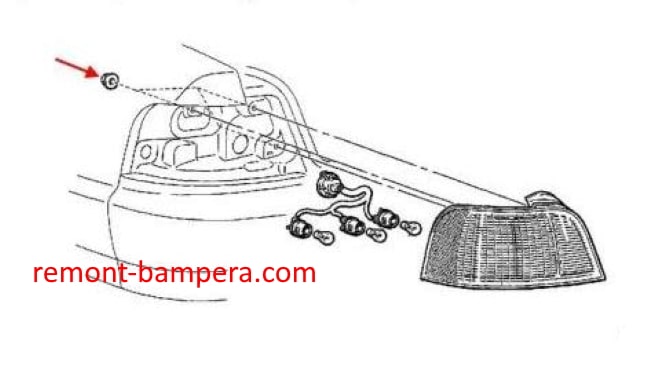
  3. Behind the trim panels, unscrew the nuts and remove the rear lights.
  4. Under the rear lights, remove two plastic clips on each side.
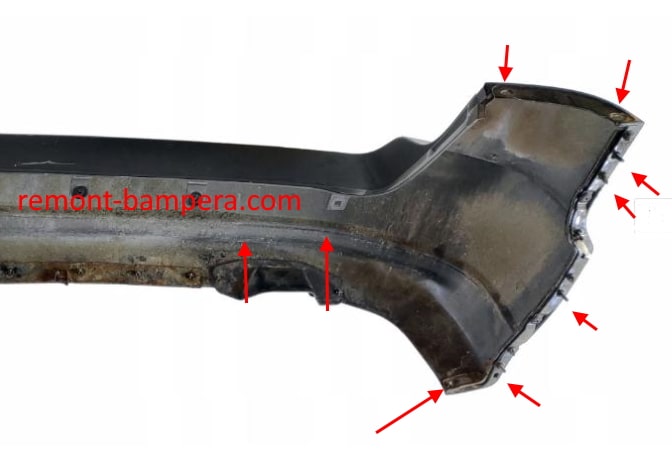
  5. From inside the trunk, unscrew the bolts (nuts) securing the bumper to the body.
  6. From under the car, unscrew the four bolts that secure the reinforcement to the body.
  7. With an assistant, pull the rear bumper backward (mind the wires).
  8. Disconnect the electrical connectors (if present).

Mitsubishi Galant VIII (1996-2006) rear bumper mounting locations

Mitsubishi Galant VIII (1996-2006) rear bumper mounting diagram

Mitsubishi Galant VIII (1996-2006) Taillight Mounting Diagram


Interesting Facts and Features

  • Innovative Body Design: The Galant VIII had a unique door construction: the window frame was not attached to the doors, but was part of the body. This improved visibility and aerodynamics, and also reduced noise at high speeds. When the door was opened, the window would lower slightly.
  • Peak of Mitsubishi Technology: The model was packed with advanced solutions: besides GDI and DI-D, it offered the adaptive INVECS-II automatic transmission, which "learned" the driver's style, and a multimedia system with GPS navigation (for top trims) — a great rarity in the late 90s.
  • High Passive Safety: In 1997, the Galant VIII received the highest 4-star rating in Euro NCAP tests, which was an outstanding result for its time.
  • "Invisible" Anti-Corrosion Treatment: The body underwent galvanizing and phosphating processes, which provided many examples with outstanding resistance to rust even in harsh winter conditions.


Advantages and Disadvantages

Advantages:

  • Excellent handling and comfort: Thanks to the multi-link suspension, the car held the road confidently and filtered out road imperfections well.
  • High build quality and interior finish: High-quality interior materials were used, and the assembly was of a high standard.
  • Quiet and comfortable cabin: Effective sound insulation and smooth operation of the V6 engine.
  • Reliability (with caveats): Most components, except for the GDI engines, had a long service life. The body is very resistant to corrosion.
  • Restrained and elegant design that ages well.

Disadvantages:

  • GDI Engines: Prone to carbon buildup on valves and injectors due to the direct injection design. They require high-quality fuel, clean air, and timely maintenance. Repairs are complex and expensive if they break.
  • Complexity and high cost of repairs: Repairing the V6 engine or all-wheel drive transmission requires high expertise and is costly.
  • Outdated 4-speed automatic transmission: Compared to competitors moving to 5- and 6-speed automatics, 4 speeds looked archaic by the end of its production.
  • Weak dealer network and parts shortage: Nowadays, finding some original parts can be difficult.