The fifth-generation Mitsubishi Colt, produced from 1995 to 2003, is an example of a reliable and practical compact car that shared its platform and many components with models from the DaimlerChrysler conglomerate. This is the last generation that could be called truly "Japanese" before the stage of greater Europeanization.

Generation and Model Code

  • Generation: Fifth (sometimes referred to as the sixth if counting from 1978).
  • Body Code: Sedan and 3-door hatchback — Z2xA, 5-door hatchback — Z2xB, 5-door minivan (Colt Plus) — Z2xC (where "x" is a digit indicating the engine type).
  • Platform: Developed jointly with the DaimlerChrysler conglomerate. The same platform was used for:
    • Smart Forfour (Type 454)
    • Mitsubishi Carisma (first generation)
    • Volvo S40/V40 (first generation)

This is a key fact that explains many technical features and the high-for-its-class body rigidity.


Technical Specifications (Main)

  • Bodies: 3- and 5-door hatchback, 4-door sedan, 5-door minivan (Colt Plus/Varica).
  • Engines (for the Russian and European markets):
    • Petrol:
      • 1.3 L (4G13) – 82 hp. A reliable and simple engine.
      • 1.6 L (4G92) – 98-100 hp. Balanced in terms of power and fuel consumption.
      • 1.6 L (4G92) MIVEC – 115 hp. The most interesting version with a variable valve timing system, providing a spirited performance.
    • Diesel: (Popular in Europe)
      • 1.5 L (4D68) – 72 hp. Turbo diesel. Economical and torquey.
  • Transmission:
    • 5-speed manual transmission (main option).
    • 4-speed automatic transmission (quite reliable, but not the most economical).
  • Suspension: Front — independent, MacPherson strut type. Rear — semi-independent torsion beam. The suspension tuning was quite stiff for a compact car, providing precise handling.
  • Safety: Standard — driver's airbag (from 1998, often already two). In expensive trim levels — ABS.


Bumper Plastic Marking: >PP+E/P<


Depending on the year of manufacture, the mounting points may vary slightly.

How to Remove the Front Bumper

The bumper can be removed with or without the metal reinforcement bar. The description below is for removal with the reinforcement bar.

  1. Open the hood.
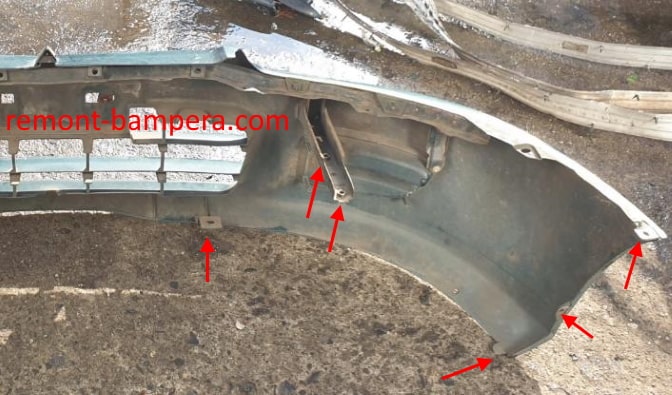
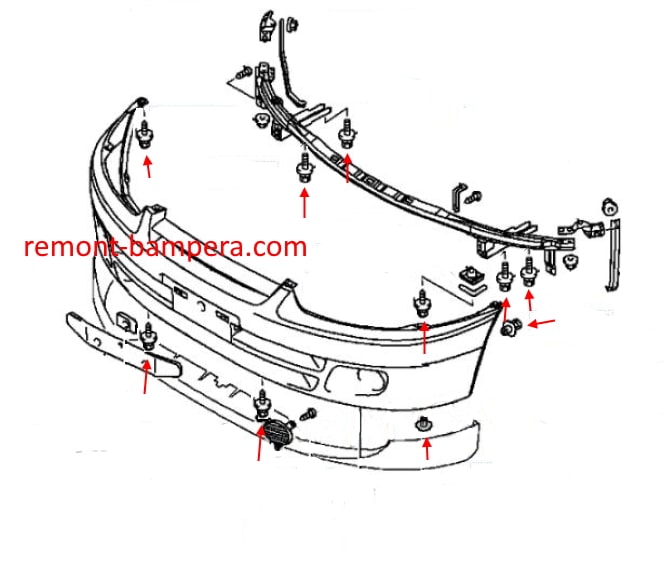
  2. From underneath, unscrew the bolts that secure the lower part (excluding those that attach the reinforcement bar to the bumper).
  3. Turn the wheels, depending on which side you are working on.
  4. In the wheel arches, unscrew the bolts that secure the front part of the wheel arch liners.
  5. Unscrew one bolt on each side (fastened from bottom to top) that secure the corners to the fenders.
  6. From the engine compartment side, unscrew the four bolts that secure the reinforcement bar to the body.
  7. With an assistant, carefully pull the bumper forward (mind the wires).
  8. Disconnect the electrical connectors (if present).

Mitsubishi Colt V CJ (1995-2003) front bumper mounting locations

Mitsubishi Colt V CJ (1995-2003) Front Bumper Mounting Diagram


How to Remove the Rear Bumper

⇒Useful tips on how to remove the bumper and not break anything.⇐

The bumper can be removed with or without the metal reinforcement bar. The description below is for removal with the reinforcement bar.

  1. Open the trunk lid.
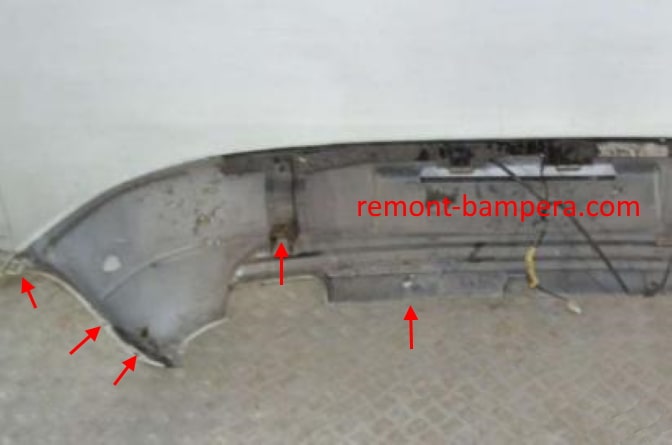
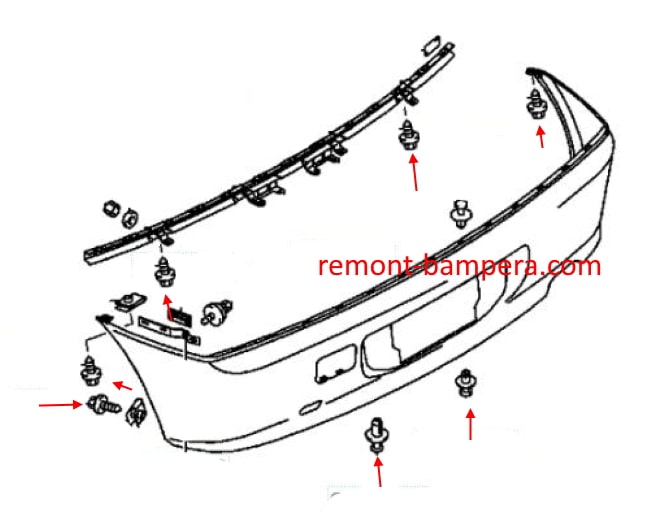
  2. In the lower part of the bumper, unscrew four bolts.
  3. In the wheel arches, unscrew the bolts that secure the rear part of the wheel arch liners.
  4. Unscrew one bolt on each side that secure the bumper corners to the fenders.
  5. Release the clips in the fenders.
  6. Unscrew the bolts that secure the bumper reinforcement bar to the body.
  7. With an assistant, pull the rear bumper backward (mind the wires).
  8. Disconnect the electrical connectors.

Mitsubishi Colt V CJ (1995-2003) rear bumper mounting locations

Mitsubishi Colt V CJ (1995-2003) Rear Bumper Mounting Diagram


Interesting Facts About the Model

  • A Relative of Volvo and Smart. The use of a shared platform with the Volvo S40/V40 (known for their safety) was a significant marketing advantage.
  • Technology from Motorsport. The 1.6 MIVEC naturally aspirated engine was a direct descendant of the engines used in the racing Lancer Evolutions. It featured a variable valve timing system and revved up to 7500 rpm, which was rare for compact cars of that time.
  • Colt Ralliart Version-R. For the Japanese market, there was a high-performance version from the Ralliart tuning division with a 1.6 MIVEC engine (140 hp), improved suspension, Recaro bucket seats, and a sporty appearance.


Advantages and Disadvantages

Advantages:

  • High Reliability. The design is time-tested. The 4G9 series petrol engines (especially the 1.3 and non-MIVEC 1.6) were renowned for their reliability with timely maintenance.
  • Sharp Handling. The rigid body and well-tuned suspension made the Colt one of the most fun-to-drive cars in its class.
  • Practicality. The hatchback, especially in the Colt Plus body, offered a huge trunk for its size.
  • Parts Availability. Due to shared components with the Mitsubishi Lancer and Carisma, as well as a large number of cars on the secondary market, finding parts is usually not a problem.

Disadvantages:

  • Stiff and Noisy Suspension. The downside of good handling was comfort. The car could be rather harsh on our roads.
  • Modest Sound Insulation. The noise level in the cabin was higher than in some competitors.
  • Weak Points: Over time, shock absorbers, ball joints, and wheel bearings may require attention. On older specimens, corrosion of the sills, wheel arches, and underbody is possible.
  • MIVEC Complexities. While the 1.6 MIVEC engine is very interesting, its repair is more complex and expensive, and it requires high-quality oil and strict adherence to the maintenance schedule for a long life.