Production Years:
The first-generation Citroën C4 Picasso was produced from 2006 to 2013. It offered a bold vision of what a practical car should be. In 2010, the model underwent a significant facelift that refreshed both its exterior and interior.
Engines:
- Petrol units:
- 1.4 VTi with 95 hp, suitable only for relaxed driving.
- 1.6 VTi (120 hp), providing acceptable performance.
- 1.6 THP, which after the facelift produced 150 or 156 hp, making the MPV surprisingly lively.
- Diesel units:
- 1.6 HDi was available in 90, 109, and 112 hp versions. This engine was renowned for its phenomenal fuel economy, but its power might be insufficient for a fully loaded vehicle.
- 2.0 HDi (in versions with 136, 140, 150, or 163 hp). It offered excellent flexibility and confident overtaking on the highway, while remaining quite economical.
Bumper plastic marking: >P/E<
Note: Depending on the model year, the mounting points may differ slightly.
How to Remove the Front Bumper
- Open the hood.
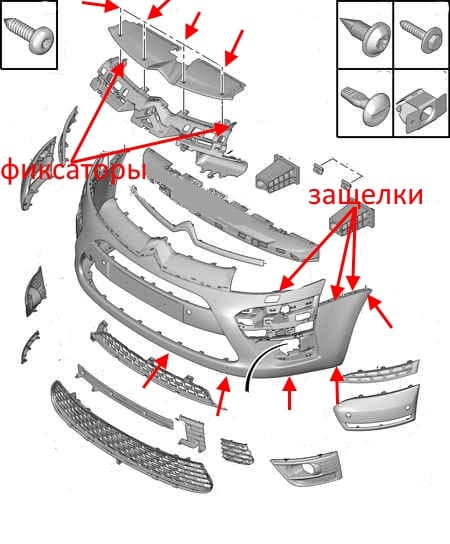
- Under the hood, remove four clips and take off the trim panel.
- Under the trim panel, unscrew the two screws that secure the upper part of the front bumper.
- Move to the lower part and unscrew the eight screws that are inserted from the bottom upward.
- In the wheel arches, remove the clips that secure the front section of the wheel arch liners.
- Behind the wheel arch liners, unscrew one screw on the left and one on the right side that secure the corners to the brackets.
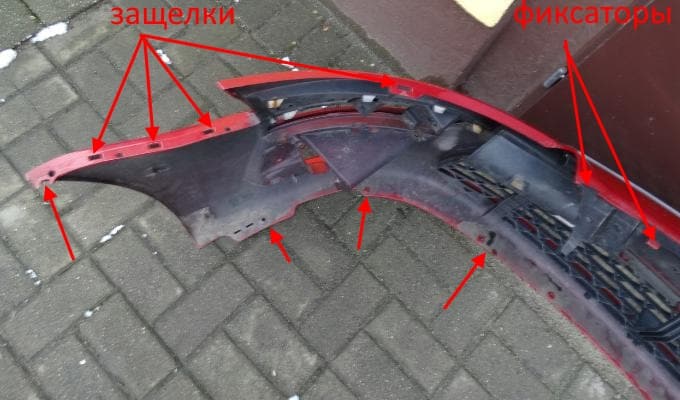
- Release the latches in the fenders and pull the corners toward you. If the latches are stiff, unscrew two screws on each side (inserted from the bottom upward) that secure the brackets to the fenders.
- With an assistant, pull the bumper forward and disconnect the electrical connectors.


How to Remove the Rear Bumper
- Open the tailgate.
- Remove the trim panels near the rear lights.
- Unscrew two screws on each side (three screws on the Grand Picasso) and remove the rear lights.
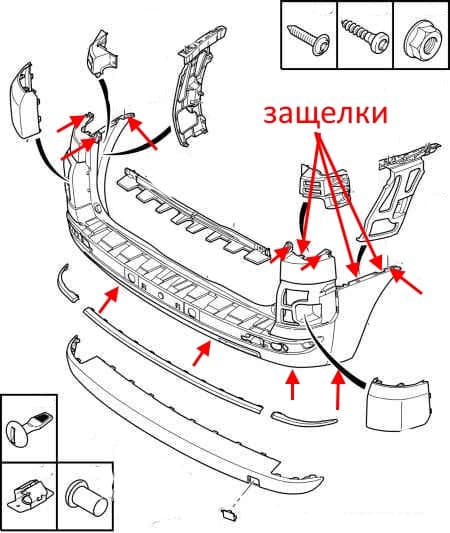
- Under the rear lights, unscrew the four screws that secure the upper part of the rear bumper.
- Go under the vehicle and unscrew the ten screws from the underside (inserted from the bottom upward).
- In the wheel arches, unscrew the screws that secure the rear section of the wheel arch liners.
- Behind the wheel arch liners, unscrew one screw on the left and one on the right side that secure the corners to the fenders.
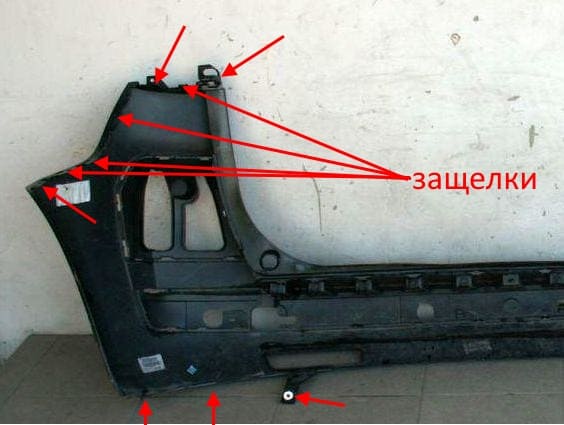
- Release the latches in the fenders and pull the bumper sharply toward you.
- With an assistant, pull the bumper backward and disconnect the electrical connectors.


Interesting Facts:
- Designers placed the digital speedometer and trip computer display in the center of the dashboard, claiming that this allows the driver to read information faster and keeps their eyes less distracted from the road.
- Instead of a conventional handbrake lever, it features an automatic parking brake. Climate control and audio system controls were concentrated on the fixed central hub of the steering wheel. While this required some getting used to, it allowed for an optimally shaped driver's airbag.
- The windshield was truly panoramic, extending far into the roof. This created a sense of light and spaciousness in the cabin, earning the car the nickname "aquarium." Sliding sunshades were provided for protection from the sun.
Advantages of the Model
- Despite the semi-independent rear torsion beam, the suspension absorbs bumps remarkably well. Combined with wide, soft seats, this makes long journeys less tiring.
- Rear legroom is enormous – three adult passengers will fit without any problems.
- The 500-liter trunk (up to 1,734 liters with the seats folded) is among the best in its class.
- On the secondary market, this is one of the most affordable ways to get a large, safe, and comfortable family car.
- Forward visibility is excellent thanks to the slim front pillars and the panoramic windshield.
Disadvantages
- Pre-facelift versions were equipped with a 4-speed automatic transmission (AL4), known for its unreliability, jerky shifts, and demanding maintenance schedule. The more modern 6-speed automatic (Aisin), introduced after 2010, is significantly more reliable, but cars with it are more expensive.
- The 1.6 THP petrol turbo engine (Prince) has chronic issues: timing chain stretch, high oil consumption, and thermostat failure.
- The 1.6 HDi diesel engines suffer from EGR valve clogging and turbocharger problems if service intervals are not strictly followed.
- The electronics, particularly those related to the central display and the light control module, can sometimes be unpredictable – typical of many French cars of that era.
- Some drivers dislike the overly soft suspension setup, which makes the car feel wallowy in corners, as well as the thin steering wheel with its fixed central hub, which not everyone can get used to.
Italiano
Français
русский
English
Deutsch
Español