The Renault Wind is a compact two-seater roadster produced by the French automaker Renault from 2010 to 2013. Despite its short production run, the model stood out for its unique design, practical construction, and sporty character.

Production Years and Platform

The Renault Wind debuted in 2010, though its concept was first introduced in 2004. Serial production began only six years later. The car was assembled at Renault's plant in Slovenia, where the Twingo and Clio were also manufactured. Production ended in 2013 due to low sales.

The Wind was based on the Renault-Nissan B platform, shared with the Clio III and Nissan Micra K12. This provided good handling but limited dynamic performance due to its modest engine lineup.


Design and Body Features

The standout feature of the Renault Wind was its retractable hardtop, which folded in just 12 seconds and didn’t take up trunk space (unlike traditional convertibles). The roof was a solid metal structure, improving noise insulation and safety.

The Wind’s design was characterized by rounded shapes, short overhangs, and compact dimensions:

  • Length: 3.83 m
  • Width: 1.69 m
  • Height: 1.43 m
  • Wheelbase: 2.37 m

The rear resembled a hatchback but without rear seats—the cabin was strictly two-seater.


Technical Specifications

The Renault Wind was offered with two gasoline engines:

  1. 1.2 TCe (100 hp) – A turbocharged engine that accelerated the car to 100 km/h in 10.5 seconds. Top speed: 191 km/h.
  2. 1.6 16V (133 hp) – A naturally aspirated engine that achieved 0–100 km/h in 9.2 seconds and a top speed of 205 km/h.

Interior and Features

The Wind’s interior was simple yet stylish, with elements borrowed from the Clio and Twingo. Standard equipment included:

  • Power package (windows, mirrors)
  • Air conditioning
  • Audio system with AUX/USB
  • Leather steering wheel

Higher trims offered:

  • Cruise control
  • Parking sensors
  • Leather seat upholstery

The dashboard had a sporty design with a centrally positioned tachometer. The trunk offered 270 liters (with the roof up), an excellent figure for a roadster.


Bumper Plastic Markings >P/E-TD5<


How to Remove the Front Bumper

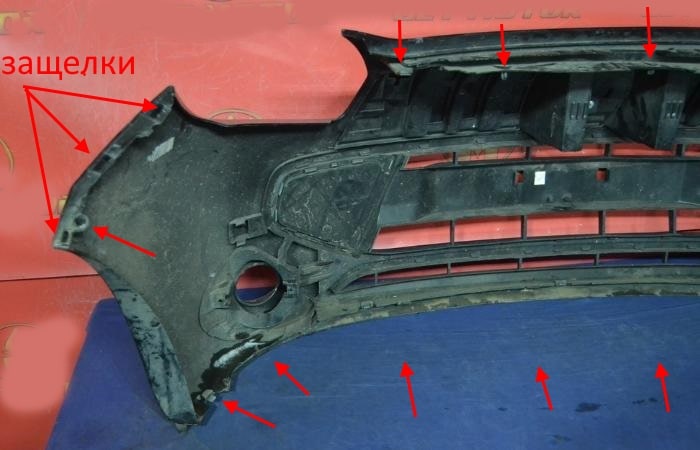
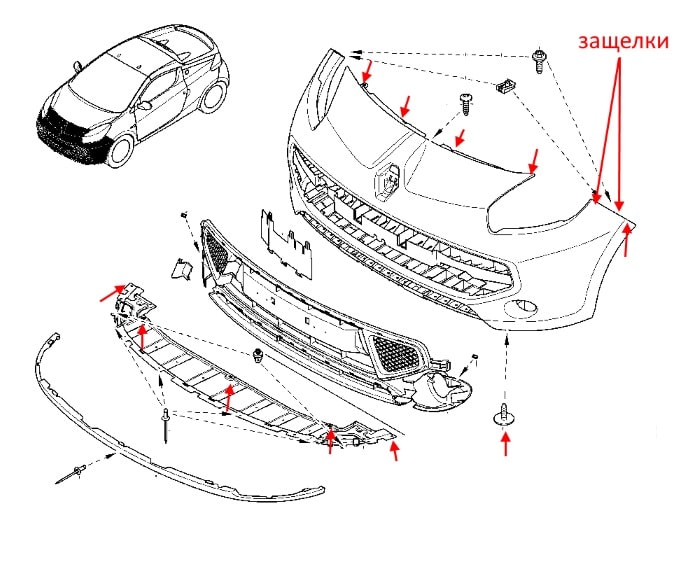
  1. Under the hood, unscrew the four top-down bolts securing the upper part of the front bumper.
  2. Unscrew the five bottom-up bolts securing the lower part.
  3. In the wheel arches, remove the screws and detach the fender liners from the bumper.
  4. Behind the fender liners, locate and remove one bolt on each side securing the bumper to the fenders.
  5. Release the clips in the fenders. Pull the bumper corner outward and use a flathead screwdriver to press the clips one by one.
  6. Release the two inner clips near the headlights and disconnect the electrical connectors.

Renault Wind front bumper mounting locations

Renault Wind Front Bumper Mounting Diagram


How to Remove the Rear Bumper

⇒Useful tips on how to remove the bumper and not break anything.⇐

  1. Remove one nut on each side, release the clips, and take off the rear lights.
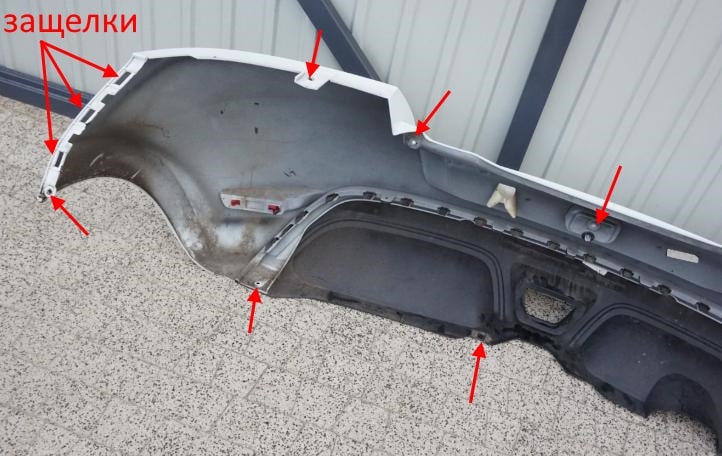
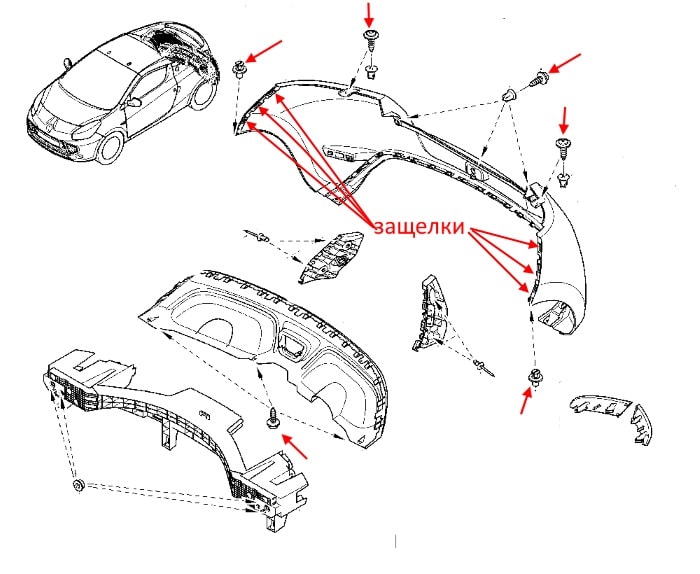
  2. Unscrew the four bolts securing the top of the rear bumper.
  3. Remove the three bottom-up bolts securing the lower part.
  4. Detach the fender liners from the bumper and remove one clip on each side securing the bumper corners to the fenders.
  5. Release the clips in the fenders. Pull the bumper downward and outward while pressing the clips with a flathead screwdriver.
  6. With an assistant, pull the bumper backward, ensuring all electrical connectors are disconnected.

rear bumper mounting points Renault Wind

Rear bumper mounting diagram Renault Wind


Advantages of the Renault Wind

  • Unique design – rare retractable hardtop in its segment.
  • Good handling – short wheelbase and low center of gravity made it fun on corners.
  • Practicality – unlike many roadsters, the trunk remained spacious even with the roof down.
  • Fuel efficiency – the 1.2 TCe engine consumed around 6.2 L/100 km in mixed driving.

Disadvantages of the Model

  • Weak performance – even the 1.6L engine didn’t make it truly sporty.
  • Stiff suspension – comfort suffered on rough roads.
  • Limited space – taller drivers might find it cramped.
  • Low sales – the niche appeal led to its quick discontinuation.


Interesting Facts

  • In 2011, the Renault Wind competed in the Nürburgring 24-hour race (SP3 class) but retired due to technical issues.
  • In Brazil, it was sold as the Nissan Kicks (not to be confused with the modern crossover).
  • In some markets (e.g., the UK), it wasn’t offered due to anticipated low demand.


Conclusion: Why the Wind Didn’t Succeed

The Renault Wind was an interesting attempt at an affordable roadster, but its lack of power and competition from the MINI Roadster and Peugeot 207 CC led to its commercial failure. Nevertheless, today it’s a rare and unconventional car that may appeal to enthusiasts of unique vehicles.м