Production Years: 1990 – 1999 (for the sedan; other body styles were produced until 2000). The third generation of the 3 Series, succeeding the E30.
Body Types
The E36 introduced new body types for the 3 Series, significantly expanding the model range:
- Sedan (4-door): The first body style, introduced in 1990. The base model.
- Coupe (2-door): Introduced in 1992. Often designated by the index "C" (Coupe).
- Convertible (2-door, soft top): Introduced in 1993. Known for its rigidity and complex top folding mechanism.
- Wagon (5-door, Touring): Debuted in 1995. Combined practicality with excellent handling.
- Hatchback (3-door, Compact): A unique model on a shortened platform with a distinctive rear-end design. Produced from 1994 to 2000.
Technical Specifications (Key European Engines)
The E36 featured a wide range of engines, from economical to high-performance.
- Gasoline:
- M40/M43: 1.6 – 1.8 L (100-115 hp) – basic, reliable engines.
- M50/M52: 1.8 – 2.8 L (140-192 hp) – The "heart" of the generation. Famous inline 6-cylinder engines known for smooth operation and high tuning potential. Later M52 engines featured the VANOS variable valve timing system.
- S50/S52: 3.0 – 3.2 L (286-321 hp) – Engines for the legendary M3 (the E36 M3 was produced from 1992 to 1999).
- Diesel:
- M41: 1.7 L (90 hp) – A turbo diesel popular for its fuel efficiency.
- M51: 2.5 L (115-143 hp) – An inline 6-cylinder turbo diesel, rare and highly sought-after today.
- Drive: Rear-wheel drive (classic BMW layout).
- Transmission: 5- or 6-speed (on M3 and later models) manual gearbox, 4- or 5-speed automatic.
- Suspension: Fully independent, revolutionary for its class: MacPherson struts at the front and a multi-link ("multi-link") setup at the rear, which provided phenomenal handling.
Bumper plastic marking: >PP+EPDM<
Note: Fastening points may differ depending on the year of manufacture and model.
How to Remove the Front Bumper
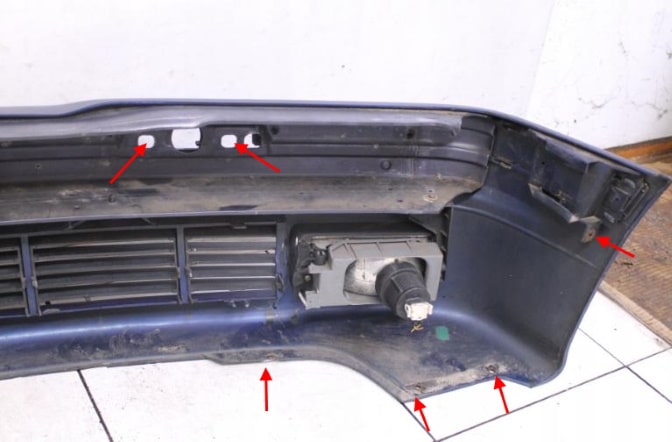
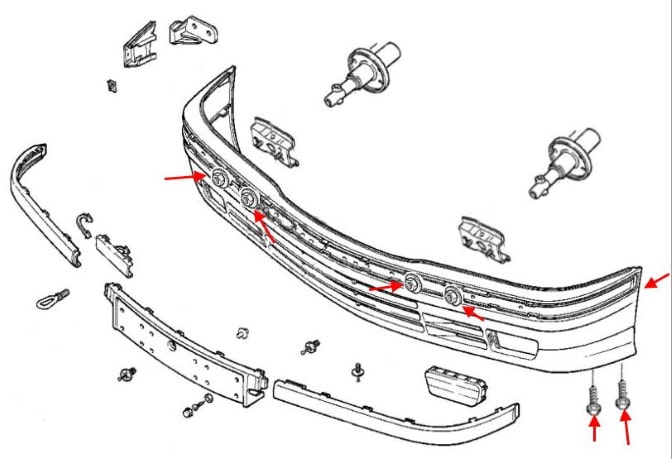
- Unscrew two screws in the wheel arches.
- Unscrew six screws from under the car (from the underside).
- Now you need to access the hidden nuts. Release the bumper trim pieces (visible in the diagram) from their clips.
- Under the trim pieces, unscrew the four nuts that secure the bumper reinforcement bar to the crash bar brackets. (If necessary, you can unscrew the nuts securing the crash bars to the body and remove the bumper together with them.)
- With an assistant, evenly pull the bumper forward off the guide brackets on the fenders.
- Disconnect the connectors from the fog lights (if installed).


How to Remove the Rear Bumper
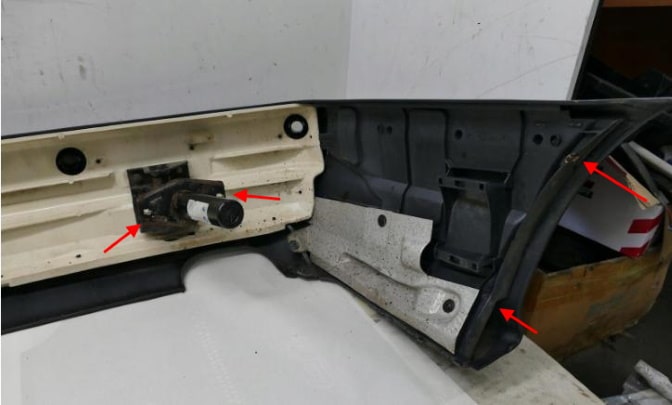
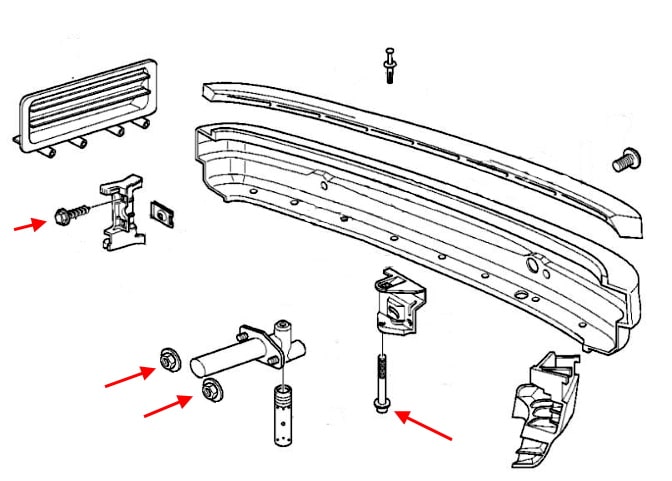
- Unscrew the screws in the wheel arches that secure the fender liners to the bumper.
- Next, there are two possible methods:
- Lie under the car and unscrew two long bolts that secure the bumper reinforcement bar brackets to the crash bars.
- Remove the trunk rear panel trim and unscrew the four nuts underneath it that secure the crash bars to the body.
- With an assistant, evenly pull the bumper backward off the guide brackets on the fenders.


Interesting Facts About the Model:
- Innovations: The E36 was the first mass-produced 3 Series with a 6-speed manual gearbox (on the M3), the first to feature coupe, convertible, and wagon body styles in the lineup, and the first to get a hatchback variant (Compact).
- Safety: It was the first 3 Series designed with modern crash tests in mind. It introduced a standard ABS system and airbags for the driver and front passenger.
- M3 Evolution: The European version of the M3 (with the S50/S52 inline-six) was fundamentally different from the American version (with the S52 engine based on the M52), making it more powerful and desirable for enthusiasts.
Advantages
- Outstanding Handling: Perfect 50:50 weight distribution and the multi-link rear suspension set new standards in the class.
- Reliable Inline 6-Cylinder Engines (M50/M52): High durability, smooth operation, and excellent sound.
- Interior Quality: A significant step forward compared to the E30, good materials, and an ergonomic driving position.
- Practicality: The introduction of the Touring body style made the model attractive for families.
Disadvantages (Typical Issues)
- Prone to Rust: Weak points include wheel arches, rocker panels, trunk lid/hood. Requires careful maintenance in winter conditions.
- Age-Related Issues: All examples today are old cars. Wear of rubber components (bushings, seals), and electrical problems (especially with the sunroof, central locking) require attention.
- M3 Maintenance: A complex and expensive model to maintain. The S50 engine with the VANOS system requires qualified service.
- Interior Plastic Quality: On many cars, the plastic of the dashboard and other elements has become brittle and prone to squeaking.
Italiano
Français
русский
English
Deutsch
Español