Model Years and Model Code
- Generation: Second generation Lexus LX (J100 series).
- Model Code: J100 (shared with Toyota Land Cruiser Cygnus/Land Cruiser 100).
- Production Years: 1998 – 2007. The model underwent a significant facelift in 2003, which affected the front and rear of the body, interior, and technical equipment.
Technical Specifications (based on official data)
- Engine: Gasoline 8-cylinder V-type engine 2UZ-FE.
- Displacement: 4.7 liters (4664 cm³).
- Power: After the 2003 facelift — 235 hp (175 kW) at 4800 rpm.
- Torque: 434 Nm at 3400 rpm.
- Transmission:
- Pre-facelift: 4-speed automatic transmission.
- Post-facelift (2003-2007): 5-speed automatic transmission.
- Drivetrain: Permanent four-wheel drive with a transfer case featuring a low-range gear and a Torsen T-type center differential.
- Suspension: Independent front (torsion bar on early models, then coil spring) and dependent rear on coil springs. A key feature was the AHC (Active Height Control) hydropneumatic adaptive suspension system, which allowed for adjusting ground clearance and shock absorber stiffness.
- Differential Locks: Electronically controlled locking rear differential.
Depending on the year of manufacture, the mounting points may differ.
How to Remove the Front Bumper
- Open the hood.
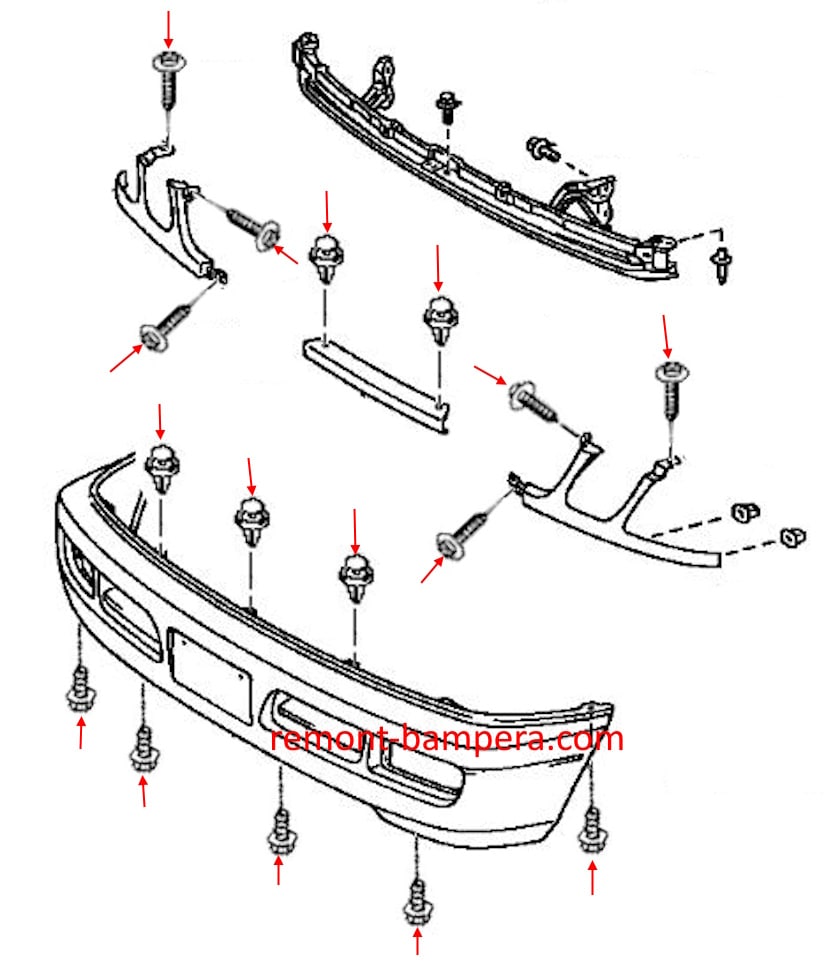
- Under the hood, remove two plastic clips, unscrew six screws, and remove the trim pieces under the headlights (they are held by clips; first remove the center part, then the side ones).
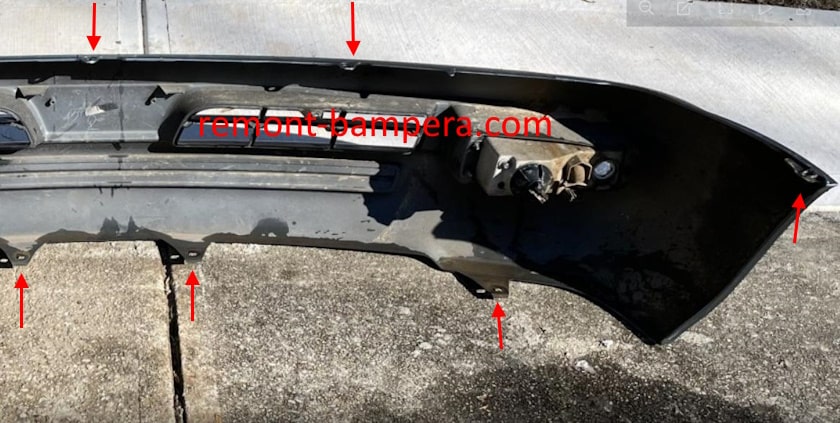
- Under the trim, remove three plastic clips (inserted from top to bottom) that secure the top part of the front bumper.
- From underneath the vehicle, unscrew four screws (fastened from bottom to top) that secure the lower part.
- Turn the wheels to the side.
- In the wheel arches, free the front part of the fender liners.
- Unscrew one screw on each side (fastened from bottom to top) that secure the corners to the fenders.
- With an assistant, carefully pull the bumper forward (make sure not to tear any wires or hoses).
- Disconnect the connectors for the fog lights.
- If equipped with headlight washers, disconnect the hoses (fluid may leak).


How to Remove the Rear Bumper
- Open the tailgate.
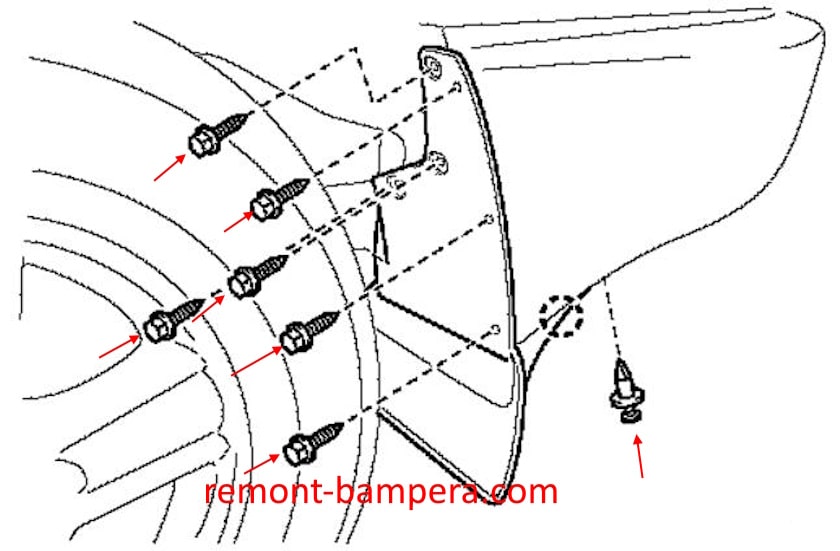
- In the wheel arches, unscrew six screws and remove one plastic clip on each side, then remove the splash guards.
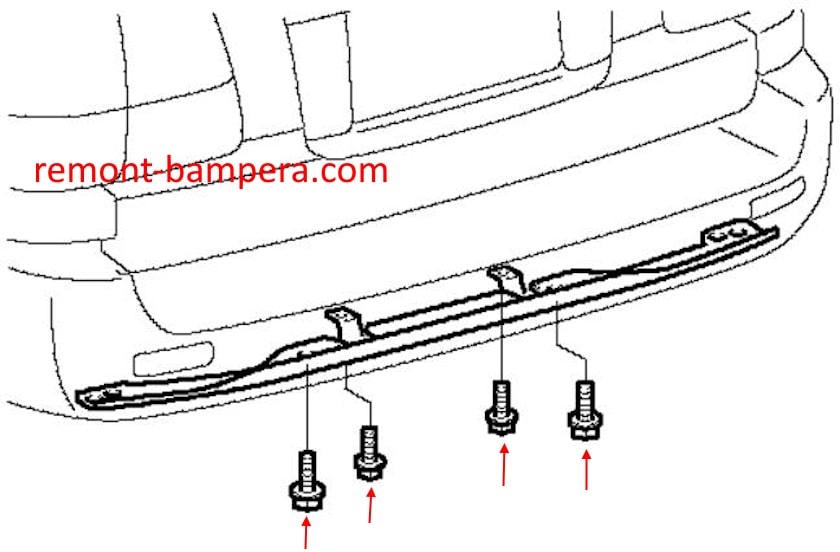
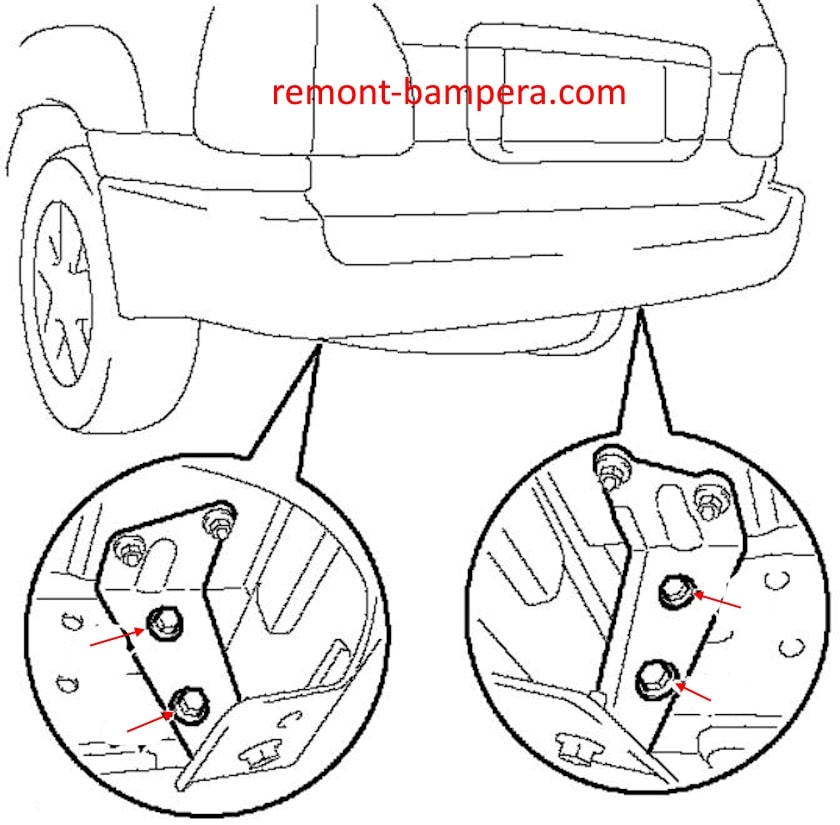
- In the lower part of the rear bumper, unscrew four screws (fastened from bottom to top).
- From underneath the vehicle, unscrew four screws (fastened from bottom to top) that secure the brackets.
- With an assistant, carefully pull the bumper backwards (mind the wires).
- Disconnect the electrical connectors (if equipped).


Interesting Facts About the Model
- Direct Relation: The LX 470 was developed on the Toyota Land Cruiser 100-series platform. The main differences were a more luxurious interior, enhanced sound insulation, a unique radiator grille and front lighting, and comfort-oriented suspension tuning.
- Off-Road Technology: The AHC system was not just an air suspension. It used hydraulic fluid and pneumatic springs, providing not only variable ground clearance but also adaptive damping.
- Unchanging Attribute: Despite its luxury status, the LX 470 was always built on a frame, emphasizing its true off-road character.
- Cult Status: On the secondary market, especially in the CIS countries, the LX 470 (like its Land Cruiser "brother") has gained a cult status as an "indestructible" vehicle, which explains its very high residual value.
Advantages
- Legendary Reliability: The 2UZ-FE engine and overall construction are known for their exceptional longevity and durability with timely maintenance.
- Outstanding Off-Road Capability: Thanks to permanent four-wheel drive, a locking rear differential, the AHC system, and high ground clearance, the LX 470 is capable of tackling serious off-road terrain while remaining comfortable.
- Luxury and Comfort: High-quality interior materials, quiet operation, and spaciousness made it one of the most comfortable SUVs of its time.
- High Residual Value: Like all Land Cruiser family vehicles, the LX 470 is famous for minimal value depreciation over time.
Disadvantages
- High Fuel Consumption: The vehicle's appetite matches its weight and engine size. City fuel consumption can easily reach 18-25 L/100 km.
- Expensive Maintenance: Parts and maintenance, especially for unique systems like AHC, require significant financial investment.
- Age: Most vehicles on the market are already quite old, which entails natural wear and tear on the body, interior, and all rubber components.
- Dimensions and Handling: Its large size and high mass make it not very maneuverable in urban environments, and its handling is predictable for a body-on-frame SUV but far from sporty.
Italiano
Français
русский
English
Deutsch
Español