Production Years:
Production of the Chrysler Aspen began in 2006 for the 2007 model year. By 2008 (for the 2009 model), production was already discontinued. The reason was not a sales flop per se, but Chrysler's bankruptcy during the 2008–2009 financial crisis and the change of ownership.
Engine Lineup:
- Base engine: 4.7-liter V8 PowerTech (EKG family). It produced 235 hp (175 kW) and 407 N·m of torque. For the two-ton Aspen, its power was barely sufficient for confident highway overtaking.
- Flagship engine: 5.7-liter HEMI V8 (EZB series) producing 335 hp (340 hp in some versions) and 500–508 N·m of torque. At cruising speeds, the engine would deactivate to V4 mode, reducing highway fuel consumption to a reasonable 11–12 liters per 100 km (city figures reached 18–20 L).
- Special offer: Chrysler offered the HEMI Performance Package as an option. Formally, power did not change, but a recalibration of the Engine Control Unit (ECU) made the throttle response sharper and the exhaust note more aggressive.
All engines were paired exclusively with the 5-speed 545RFE automatic transmission, which was known for its reliability but didn't impress with shift speed.
Depending on the model year, the mounting points may vary slightly.
How to Remove the Front Bumper
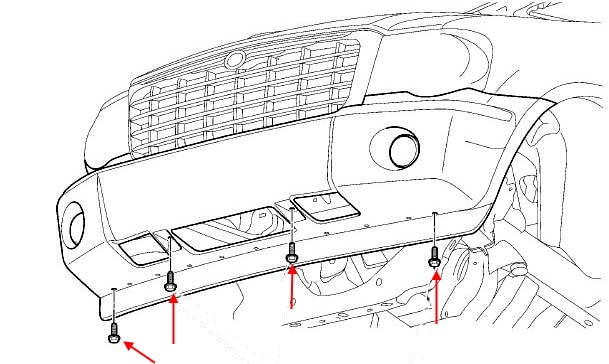
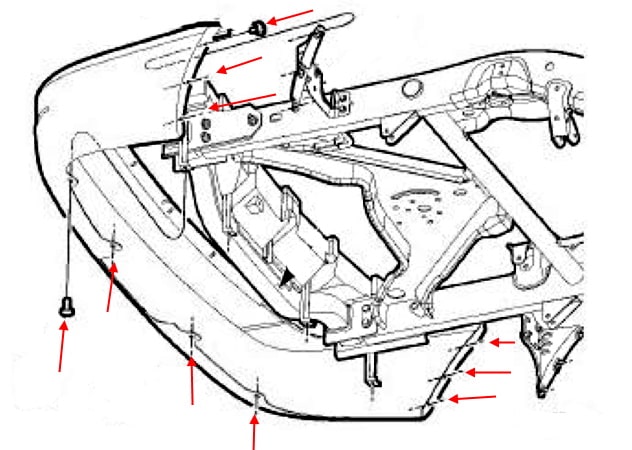
- Unscrew the four bolts that are installed from the bottom up and secure the lower part of the front bumper.
- Turn the wheels to the left or right, depending on which side you are working on.
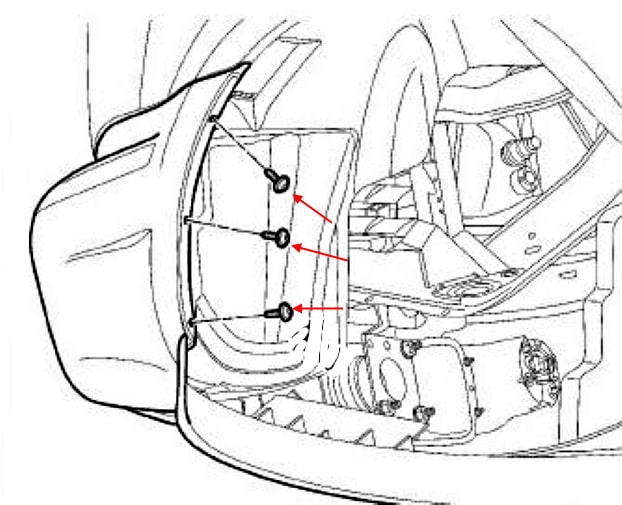
- In the wheel arches, unscrew three screws on the left side and three on the right side.
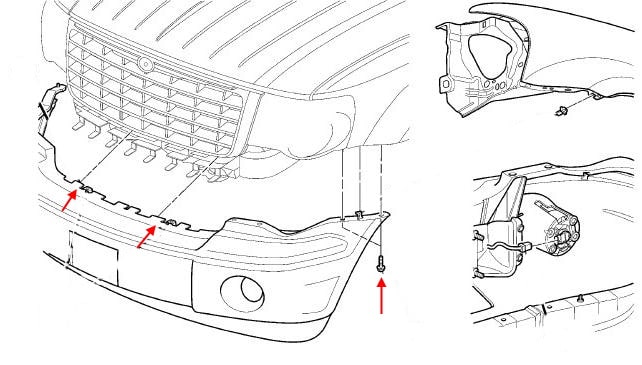
- From the inside of the bumper, unscrew two screws on the left and two on the right, which are installed from the bottom up and secure the corners to the fenders.
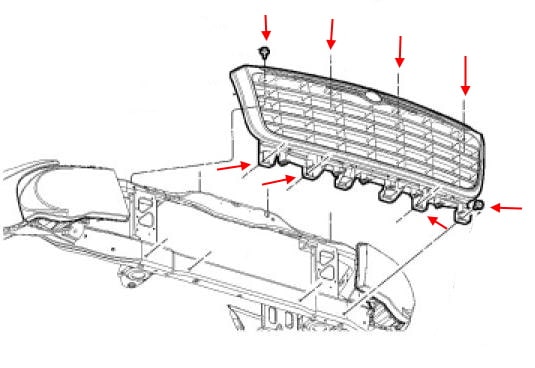
- Release the clips under the radiator grille.
- With an assistant, pull the bumper forward and remove it (watch for wires and hoses).
- Disconnect the electrical connectors (if equipped).
- Disconnect the headlight washer hoses (if installed).


How to Remove the Rear Bumper
- Open the tailgate.
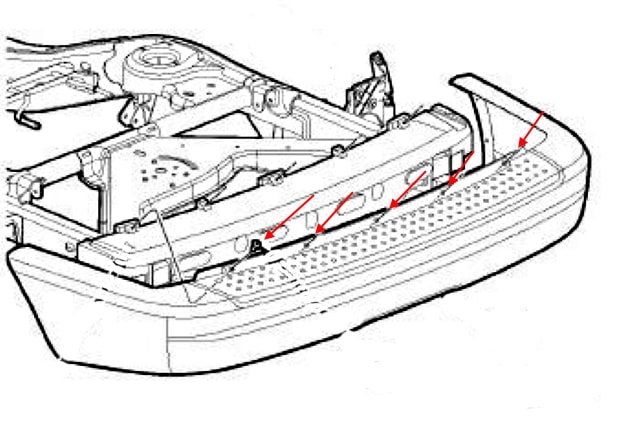
- In the tailgate opening, unscrew the five screws that secure the upper part of the rear bumper.
- Unscrew the four screws from the underside, which are installed from the bottom up.
- In the wheel arches, unscrew two screws on the left side and two on the right side.
- With an assistant, pull the bumper backward to remove it and disconnect the electrical connectors.


Interesting Facts:
- The Aspen became the only full-size body-on-frame SUV in the history of the Chrysler brand. Before it, the brand only had crossover-like vehicles (e.g., the Pacifica), and after it, only crossovers.
- Thanks to the DaimlerChrysler era, the Aspen's interior featured a steering wheel with column-mounted switches identical to those found on the Mercedes-Benz E-Class (W211). Additionally, the chassis architecture incorporated independent rear suspension components developed with the involvement of German engineers.
- In 2008, Chrysler announced a hybrid version of the Aspen with the Two-Mode Hybrid system, developed jointly with GM and BMW. A prototype was even shown to the public, promising a 25% fuel economy improvement. However, due to the bankruptcy, the project was canceled, and the hybrid Aspen never entered production.
Advantages
- Appearance and Status: It was a true "American limousine" on wheels. The massive chrome grille and boxy shapes set it apart from the more brutish Tahoe. It looked more expensive than it actually was.
- Comfort: Thanks to the air suspension (an option for top-tier versions) and a long wheelbase (3028 mm), it drove not like a truck, but like a large sedan. The interior was trimmed with high-quality leather and genuine wood (not plastic imitating wood).
- Towing Capability: The 5.7-liter HEMI allowed towing a trailer weighing up to 3.5 tons, which was a class record at the time.
Disadvantages
- Fuel Consumption: Even with the MDS system, the average combined fuel consumption was around 16–17 liters per 100 km.
- Plastic Quality: Although the interior was beautiful, the lower parts of the panels and door cards were made of hard plastic that squeaked on uneven roads.
- Handling: The steering wheel was "vague," with significant play. At speeds above 120 km/h, constant steering corrections were required due to the body's susceptibility to crosswinds.
- Expensive Repairs: The rear air suspension air springs would fail by 80,000 km, and replacing them cost as much as a major engine overhaul on mass-market Japanese cars.
Italiano
Français
русский
English
Deutsch
Español