Model Years and Facelift

First Release: 1998 (debut at the Paris Motor Show, sales from the 1999 model year).

Facelift: 2003 (model often referred to as Phase 2). Key changes: new front end with the signature "shield" grille, revised headlights and bumpers, updated instrument panel, improved interior materials, new engines and transmissions.

End of Production: 2007. It did not receive a direct successor, marking the end of the era of large rear-wheel-drive Alfa Romeo sedans.


Technical Specifications (Main Variants)

Platform: Rear-wheel drive (with optional Q4 all-wheel drive on post-facelift models).

Engines (Petrol):

  • 2.0 Twin Spark (155 hp)
  • 2.5 V6 24V (190 hp)
  • 3.0 V6 24V (226 hp, later 220 hp) — flagship, the most common.
  • 3.2 V6 24V (240 hp) — only after the facelift.

Engines (Diesel):

  • 2.4 JTD (140 hp, later 150 hp) — 5-cylinder.
  • 2.4 JTD Multijet (175 hp) — post-facelift, 5-cylinder.

Transmissions: 5- and 6-speed manual gearboxes, 4- and 5-speed automatic gearboxes (Sportronic).

Suspension: Independent, double wishbone front and rear ("Colin Chapman layout"), providing excellent handling.


Bumper Plastic Marking: >PP-TD10<


Mounting points differ depending on the year of manufacture.

How to Remove the Front Bumper

Phase 1 (1999-2003):

  1. Open the hood.
  2. Unscrew the bolts and remove the radiator grilles.
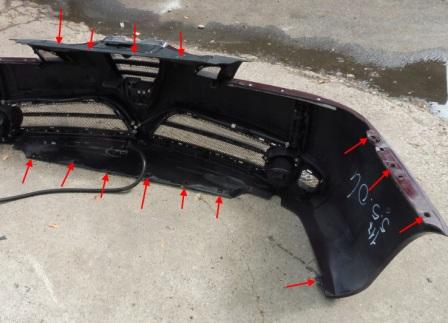
  3. Behind the grilles, unscrew the four bolts securing the top part of the front bumper.
  4. From underneath the car, unscrew the seven bolts securing the lower part.
  5. Turn the front wheels to the side and remove the front halves of the wheel arch liners.
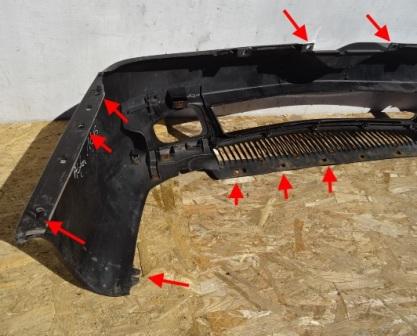
  6. Behind the liners, unscrew the six bolts (fastened from bottom to top) securing the sides of the bumper to the fenders.
  7. With an assistant, pull the bumper forward to remove it. Disconnect the electrical connectors and headlight washer hoses.

Alfa Romeo 166 front bumper mounting locations

Alfa Romeo 166 front bumper mounting diagram

Phase 2 (2003-2007):

  1. Unscrew the four bolts (fastened from top to bottom) securing the top part of the front bumper.
  2. Unscrew two bolts, then carefully release and remove the two grilles near the headlights using a thin flat-head screwdriver.
  3. Behind these grilles, unscrew two bolts (fastened from top to bottom).
  4. Get under the car and unscrew the eight bolts (fastened from bottom to upward).
  5. In the wheel arches, unscrew the bolts and remove the front halves of the wheel arch liners.
  6. From the inner side of the fenders, unscrew six bolts (fastened from bottom to top) securing the sides of the bumper to the fenders.
  7. With an assistant, pull the bumper forward to remove it. Pay attention to wires and hoses.

Alfa Romeo 166 front bumper mounting locations

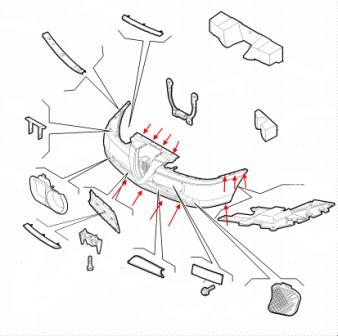
Alfa Romeo 166 front bumper mounting diagram


How to Remove the Rear Bumper

⇒Useful tips on how to remove the bumper and not break anything.⇐

  1. Open the trunk lid.
  2. Inside the trunk opening, unscrew two bolts.
  3. Release the side trunk trim panels (to gain access to the rear of the fenders).
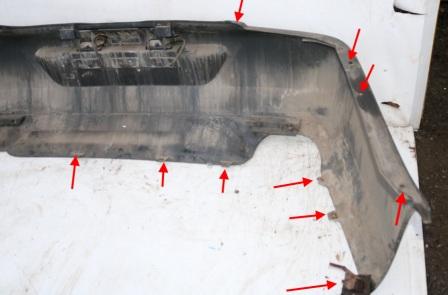
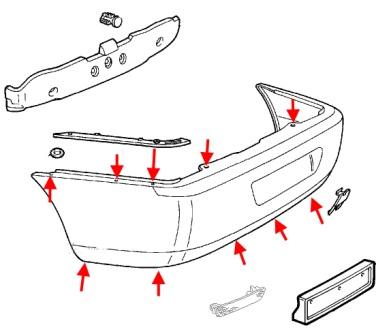
  4. Behind the trim, unscrew four bolts (fastened from top to bottom) securing the sides of the bumper to the fenders.
  5. Move to the lower side: from underneath the car, unscrew nine bolts.
  6. In the wheel arches, unscrew two bolts (fastened from bottom to top) securing the corners to the fenders.
  7. With an assistant, pull the bumper backward to remove it. Mind the wires.
  8. Disconnect the connectors for the license plate light and (if equipped) parking sensors.

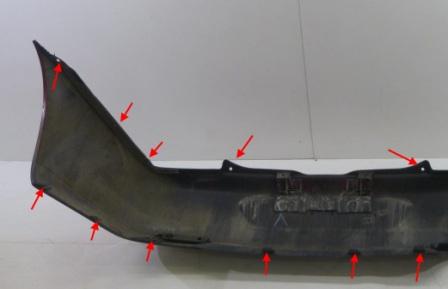
Alfa Romeo 166 rear bumper mounting locations

Alfa Romeo 166 rear bumper mounting diagram


Interesting Facts

  • Design by Centro Stile Alfa Romeo with input from Walter de Silva. A more radical design was initially planned, but the conservative business sedan market forced it to be toned down.
  • Technology: For its class, the model was progressively equipped: aluminum suspension components, ASR and VDC stability control systems, onboard computer, climate control with touch panels (pre-facelift), xenon headlights.
  • sports version from the motorsport division Prodrive existed as a prototype with all-wheel drive and a 3.0 V6 engine but did not enter series production.
  • Police Version: In Italy, the 166 was used by the highway patrol (Polizia Stradale).


Advantages

  • Vivid, emotional handling: Unique in its class for sharp steering feel and feedback from the rear-wheel-drive platform.
  • Distinctive Italian design: Stately, elegant, with a touch of aggression, especially after the facelift.
  • Excellent naturally aspirated V6 engines: Power, smooth operation, and a unique sound.
  • High-quality interior finish (post-facelift): Use of premium materials: leather, carbon fiber, wood.
  • Good sound insulation and highway comfort.

Disadvantages

  • Reliability and durability: Typical Alfa Romeo issues of that era: electronics, interior plastic quality (especially in early versions), corrosion of some components.
  • Expensive maintenance: High cost of spare parts and repair of complex units (e.g., V6 engines or automatic transmissions).
  • Low fuel economy of petrol versions, especially the V6.
  • Limited rear seat space by E-segment standards (e.g., compared to Audi A6 or BMW 5 Series).
  • Significant depreciation: As a used car, it poses high risks for an unprepared buyer.